Top Tips for the Best African Safari Vehicle
Why should you listen to my advice? My name is Steve Baker and I have lived in East Africa since 2000. I have traveled the length and breadth of Tanzania, Kenya, and Uganda, and even popped into Somalia on occasion. I brought four children up on this continent. I have been on so many safaris to so many parks over the years and built a wealth of experience.
Why should the vehicle you get on safari matter?
For one you will be spending a considerable amount of time in the vehicle. Comfort and seating are of paramount importance.
Which type of Safari Vehicle and why.
When you choose your African safari, it is very important to ask whether you will be in a four-wheel drive Toyota Landcruiser or a minivan. The type of vehicle will be heavily influenced by several factors, including destination, and budget. If you are just traveling for a day trip, then you will most probably be in a mini-van.
There are pros and cons for both.
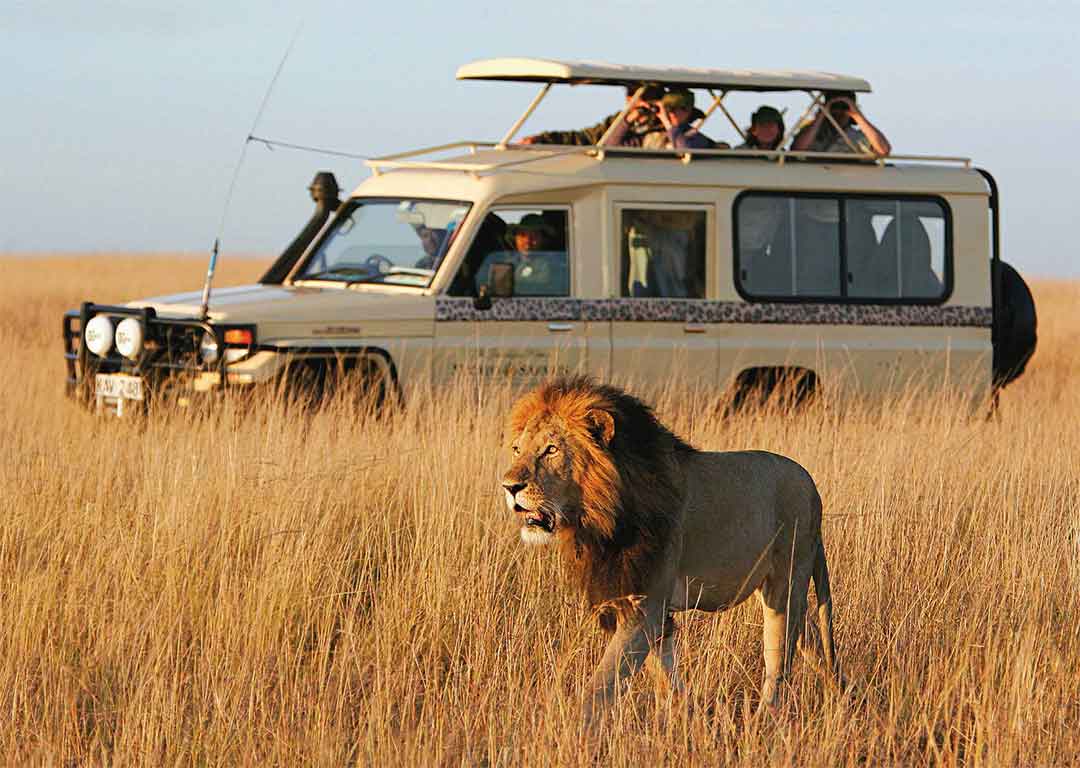
Pros: Toyota Landcruiser- The land cruisers are usually extended models. They offer you more personal space as there are usually only six seats. The land cruiser is more rugged so can traverse more difficult terrain especially if you are going during the rainy season or the migration.
Cons: Toyota Landcruiser-There are much more expensive. You can expect to pay anywhere from $200.00 to $500.00 per day depending on the season. The land cruisers are often the older design so are noisy when you are traveling between parks on the tarmac road.
Pros: Mini-Van: Much cheaper on a daily basis. They can have up to fourteen seats so if your group is large and you are watching the budget, they are ideal. They are great for the journey to and from the park. As long as you stick to the main routes in the part you should be fine. The minivans sometimes come with four-wheel drive which is worth asking about.
Cons: Mini-Van: They are lower down so even with the roof open it is more difficult to see the wildlife. You cannot get to the more remote areas. Some of the more exclusive lodges are in out-of-the-way places that minivans would have issues getting to.
Closed or open top-This factor is very important when choosing your vehicle. If you have an open-top vehicle the driver will lift the roof as soon as you are in the park. You can then stand up and are able to see so much more. If you are serious about getting those once-in-a-lifetime shots, then insist on an open-top vehicle.
 African Safari Vehicle
Driver:
A good driver can make or break the safari. You should always ask if the driver has experience with African Safaris. He should be a member of the Kenya Professional Safari Guides Association (KPSGA) with a level of at least silver. Or equivalent in the country you are visiting.
Charging Your Devices:
In this modern age, we are always looking for charging points. Most African Safari companies have adapted to this and make sure each vehicle has charging points for your phone and camera batteries. Make sure you ask whether this feature is included and also if it is working!
VHF Radio:
Each vehicle should have a VHF radio on board. This is great for the drivers to talk to each other when they spot the elusive big five. But it also has an important safety issue as drivers can call for help if required. In some parks, there will be no mobile signal, so make sure you ask which radio the driver has in the vehicle and again whether it is working.
African Safari Vehicle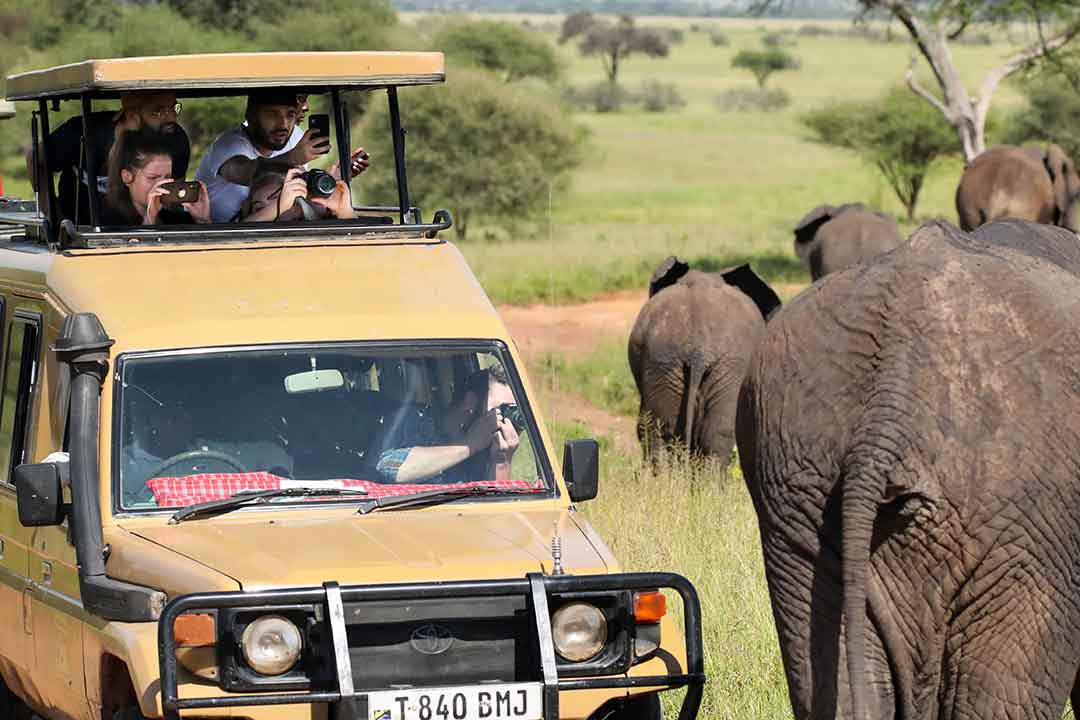
First Aid:
You are on your own once you enter the park. These parks are not like a zoo, the animals have the upper hand. If you do get injured, you will need a good first aid box to ensure you can stop any bleeding or splint up a broken limb while the safari driver takes you to safety. Always ask about the first aid in the car and whether the driver is First Aid qualified. I would always advise that someone in your party has a First Aid kit and if possible, knows how to use it.
Hydration:
Most African Safari vehicles make sure they have a cooler box or a fridge on board. It is a good idea to ask about this when booking and whether they supply the daily water or not. Dehydration is a real risk when you are on an African Safari. It is very wise to carry your own water bottle and refill it at the camp every morning. I use an insulated water bottle when I am on an African Safari as that lovely cool water is always welcome after a few hours of heat and dust.
Reading Material:
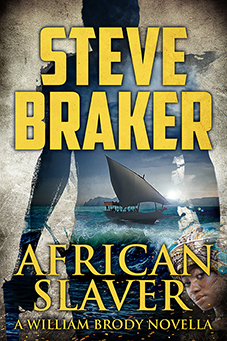
If you are picked up from the airport for your African Safari, and you are heading straight for the parks, expect at least a three-hour journey. I always carry my Kindle reader for these long trips; the roads soon become boring or it may even be at night. Make sure you pick up a copy of my latest book on Amazon before your trip. I write thrillers based in East Africa. Brody Williams is just like you, traveling to Africa for the first time. You can follow his adventures and pick up some of the lingo, as you travel through the countryside. African Ivory the fourth in the series is set in a game park. You can read all about his adventures as you see the sites before you eyes.