A Leopard Attacks the Village
Where I live in Mombasa is not exactly in the bush. However, we do get reminders from time to time that it is very close. The clever, thieving vervets that come and invade my house, stealing anything they can lay their hands on is one. Plus, all of the weird and wonderful bugs that turn up and eat my furniture! However, last week my mother-in-law was visiting from Kisumu and wanted to make a journey to Samburu to see another of her daughters, she has nine children! I’m always up for a trip, so I readily agreed. We left early in the morning, as the roads were not so good, and headed up into the hills behind Mombasa to an area called Kaloleni. This area has not seen rain for nearly six years, so is very dry. Life in Kaloleni is tough, no electricity and the rivers are running dry.
We found our way to a place on the main Mombasa-Nairobi Road called Mazeras, then turned off the main road and into the bush. Once we left the road, we felt the change. It is a bit like going back in time, the long marram roads stretch out to the horizon. There are hardly any trees left, just dry, dust-filled riverbeds. The man walking next to his overburdened donkey was the only person we could see for miles.
We headed inland to a valley with one of the last remaining flowing rivers. This area is populated by the Duruma, one of the nine tribes of the Mijikenda, a herding tribe that are very closely related to the Giriamas. When we arrived, we drove next to the river for a few miles and then came across the homestead, or Kaya, we had been looking for. Nyanya, that’s Grandmother in Kiswahili, was very happy to see her sister it had been about five years since she had decided to marry a Duruma man and live in the bush. However, her husband, Kazungu, was very excited to tell us a story. We sat next to the river with our mugs of sweet black tea, so he could recount the happenings of the previous day. The area down by the river was the only water and vegetation in the area. Several families lived nearby, surviving with the few cattle, goats, and chickens that had not succumbed to the weather or the wildlife. The Duruma are a tribe that herds cattle mostly on small subsistence farms next to their kayas.

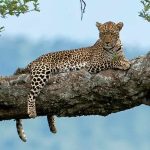
We settled in to allow for the story, it had all started with them losing some chickens one night, then a baby goat had gone missing. At first, the small village thought it was just a mongoose or some rats. But the animals kept disappearing. Then, the morning before we arrived, Kazungu heard screaming coming from the riverbank and ran down to see what all the commotion was about. He found his six-year-old daughter standing on a rock in the middle of the stream, screaming and pointing at the bush. Kazungu had grabbed his spear as he left the boma, he searched the area where the child was pointing and flushed out a fully grown leopard. The creature was as mad as hell having been interrupted during the stalking of its prey. Kazungu tried to scare the leopard by jumping up and down and waving his spear in the animal’s face, but it only snarled back and would not run away like they usually do.
The two stood face to face, Kazungu knew he was in danger, so he shouted out to his friends in the village, but no one came. His daughter, Kamari, managed to get out of the stream and run for help. Kazungu tried to stab the leopard with his spear, but the animal swung its paw and lacerated Kazungu’s hand, making him drop his weapon. The leopard then leaped at Kazungu, but he managed to grab the creature’s paws and hold him. The leopard’s teeth were just inches away from his face as he tried to throw the animal into the river. Leopards use this method of attack, they leap onto their prey using their front claws to latch onto the shoulders, then they use their hind claws to eviscerate their prey. Kazungu knew this, so he tried his hardest to keep the animal at bay by swinging it around, all the while screaming at the top of his lungs for help. Kamari ran to the kaya, but everyone was gone with the cattle, so she grabbed a panga, a long fourteen-inch knife used for farming, and raced back to her father.
When she arrived, it was obvious her dad was in serious trouble. With bravery that I don’t possess, she ran up to the leopard, which was still being swung around by Kazungu. She timed her blow and struck the cat across the side of the head with the massive knife. She told me the chui, or leopard in Kiswahili, screamed, so she hit it again and again. The animal soon lost consciousness, and Kazungu threw it onto the floor and then stabbed it with his spear.
Young Kamari reminds me of the freedom fighter I wrote about a while ago, Mekatilili wa Menza, who battled with the British during their occupation. If you fancy a read, here’s the link.
This is a sad part of life in Africa, people do not live with wild animals very well. Kazungu’s child was in danger, and so he did the right thing. But the poor leopard was also just trying to live. For a leopard, a chicken, or a baby goat is just as good as a young defenseless child. And as usual, the animal has to pay with its life.

It brought home to me that we are very close to nature here. I might think I live in my ivory tower away from the animals and danger, but it is always lurking not far from my door.
For loads of useful information on African Safaris and Africa in general just click here
If you would like to get in contact with me then click here
Below are some more useful links about Safaris in Africa- Enjoy!
Top Tips for an African Safari and Beach Holiday
African Safari Which is the Best Country to Choose and Why?