

The Anglo-Zanzibar War. The Shorest War in History
A Ten Minute Read
The story starts when Zanzibar was a hub for ivory, cloves, and allegedly the largest slave market in the world; at its peak, there are estimates that over 50,000 slaves were traded per year from Zanzibar.
During the 17th century, Zanzibar was ruled by the royal family of Oman some 2000 miles away on the Arabian Peninsula. The Omanian Sultans enjoyed a very profitable stay in Zanzibar or Unguja as it is known to the Swahilis. There was a plentiful supply of slaves and ivory from the mainland and cloves grew well on the island. It is estimated that some 130,000 slaves were used on the clove farms at their peak.
The East African Slave trade is not as well known as the West African slave trade. However, the Arabian slave traders would often enter the African mainland and go in land as far as the Congo some 1000 miles over very difficult terrain to grab slaves and bring them back to Zanzibar. The trade went on for some 1000 years much longer than the known history of the Atlantic slave trade.
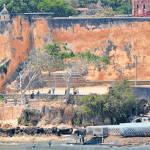
The Omanis lasted in Zanzibar until the 1860s when Zanzibar managed to secure its independence, although it still had very strong trading ties with Oman. The royal palace built on the waterfront was a very opulent building with walkways fanning out to other administration buildings it was known locally as “The Palace of Wonders”, and was a residence and administration building certainly not a fortress. The sultan had no real concerns about being attacked, the slaves were kept far away from the main town, Zanzibar controlled the immediate mainland of what is now Tanzania, and they were friends with the British who, although against the slaver were turning a blind eye to it all.
However, you can never trust the British!
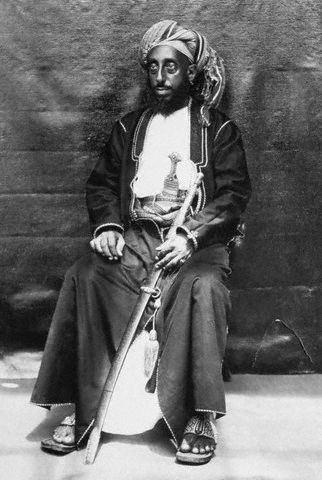
Back in the 1830s, Britain had outlawed slavery, this idea had become very popular and turned into a moral crusade by certain members of the government. The British had decided, as they do, that all slave trade around the world must be stamped out. They had a fleet overseeing West Africa but gradually their eyes turned more towards the other side of the continent. With the help of Dr Livingstone, Britain sent warships to Zanzibar to curtail any more transfers of slaves from the market. The Zanzibarians could not fight against the might of the British navy so agreed to close their markets. However, there were still many thousands of slaves still working in the clove plantations of Zanzibar. Some of the Arab traders disagreed with the British, one of the most notable was Tippu Tip, who was a friend of Dr Livingstone, and an infamous and cruel man who led many expeditions from Zanzibar into the depths of Africa to capture and trade slaves for the clove plantations.
Britain sent ships to the Indian Ocean to try and curtail the now underground slave trade and had varying levels of success. As it got more and more difficult for the Arabia slave traders to operate in the ocean, they started walking their slaves across Ethiopia and into the Arabian Peninsula. This created even more cruelty, it is estimated that over 85% of slaves taken on this perilous route died.
Whenever I start studying the lofty ideals of the British in East Africa, I always come across a rub. In this case, the British were becoming very concerned that the Germans were taking huge chunks of East Africa and they wanted more than their fair share. So, in 1890 the Germans and the British signed the Heligoland-Zanzibar Treaty. The new agreement stated that Britain would hand over the island of Heligoland in the North Sea and the Caprivi Strip in Southwest Africa, in return the Germans accept that the land that was to become Kenya belonged to Britain and would leave Zanzibar alone.
Britain then had a very strategic island in the Indian Ocean. They gave the island a status of a protectorate, which meant they would make sure the sultan was in their pocket, but he could do whatever he wanted as long as he didn’t upset the queen!
This short history lesson brings us to the shortest war in history. On the morning of the 25th of August 1896, Zanzibar was stunned to hear that Sultan Hamad bin Thuwaini, at only 29 years old, had died. Immediately, there were accusations that he had been poisoned, and there might be some truth in the rumors as Sultan Khalid bin Barghash had been passed over in favor of his uncle only three years earlier and had never gotten over it. In fact, at the time he had invaded the palace and only agreed to leave when the British had intervened. But this time it was different, Sultan Khalid bin Barghash was prepared. Within hours he moved into the palace with his three-thousand-armed supporters.
The British were not too happy with the new Sultan as he was known to be against the agreements with the British and he was pro-slavery. The chief British diplomat on the island Basil Shillito Cave ordered the new Sultan to stand down. However, Khalid had other ideas and just ignored the message and continued with the organization of his coronation.
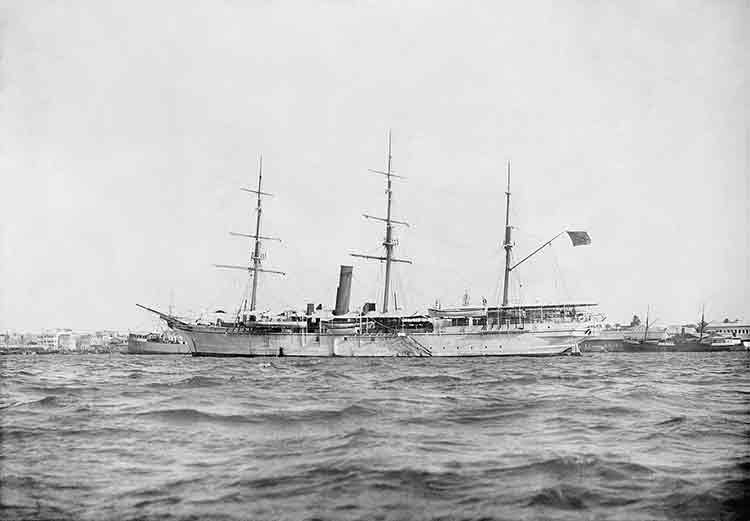
At this point, the British do what they always can be relied upon to do and sent HMS Philomel, a pearl-class cruiser, HMS Thrush, a Redbreast-class gunboat, and HMS Sparrow, another Redbreast gunboat. This action was meant to intimidate the new Sultan and make him stand down. But Khalid was in no mood for the British gunboat diplomacy and completely ignored them. So the stage was set for the shortest war in history.
Basil Cave contacted the British Government asking if the gunboats had permission to fire on the Palace of Wonders if the new sultan did not agree to his terms. While Cave waited for the reply, Khalid Barghash went ahead and conducted the coronation and crowned himself Sultan of Zanzibar.
The following day two more cruisers arrived in the already crowded Zanzibar harbor, HMS Racoon and HMS St. George. The British sent 250 marines ashore to ensure the British consulate came to no harm. Then everyone waited.
Khalid was up against five British Gunboats moored directly in front of the Palace of Wonders. All he had to defend himself was a Gatling gun, that had ironically been given to the sultanate by Queen Victoria, and two ten-pound field guns donated by Keiser Wilhelm. He also had his royal yacht, HMS Glasgow.
On the 26th the British Government permitted Cave to engage. He sent an ultimatum to Khalid demanding his forces stand down and break up and that he leave the palace by 9.00 am the following morning. In response, Khalid barricaded himself in the Palace of Wonders.
On the morning of the 27th of August 1896, Zanzibar was very tense, only the sound of a braying donkey could be heard from the silent streets. Most of the residents living close to the palace had evacuated the night before and the normally busy fish market was silent. The game was on and the British love a war!
At 8 am, Khalid broke the silence by announcing he had no intention of caving to the British Colonialists and announced that the British would not dare to fire on the Sultan’s Palace. I admire Khalid at this point, he must have been so annoyed that a tiny island halfway across the world was telling him what he could and could not do. But bluffing with the English is a very serious affair!
At exactly 9 am all five cruisers turned their guns towards the Palace of Wonders. At 9.02 am they opened fire. In a matter of minutes, all of the heavy weapons Khalid had at hand were destroyed and the wooden palace was on fire. Khalid realized he had made a big mistake and ran out the back door heading for the German consulate. His supporters soon realized their leader had done a runner and stopped firing their rifles. In the harbor, the royal yacht decided to open fire on the British flotilla firing her seven, nine-inch guns. The British immediately turned their attention to HMS Glasgow and soon holed her below the waterline and she rapidly sank into the shallow waters of the harbor. The total engagement ended at 9.38 am; The Anglo-Zanzibar/ The Shortest War in History war was over.
Sultan Khalid bin Barghash made it to the German consulate and was given sanctuary. Basil Cave made an immediate order that if Khalid were to step onto British soil he was to be arrested. He then sent the Marines to surround the German Consulate. However, the Kaiser sent a German gunboat from Dar-es-Salaam it docked at the very end of the Consulate gardens avoiding stepping on British soil. He spent the next twenty years living in German East Africa, St. Helena, and the Seychelles. Eventually, he was allowed to return to East Africa and lived in Mombasa where he died in 1927. All I could find out was that he lived in a large, red-bricked house in Makadara which is in the center of Old Town Mombasa. I think it is poigant that the Sultan had to spend so long away from his beloved Africa after such a short conflict the Shortest War in History became a very long and heavy chain around the sultans neck!
This article is a bit longer than usual, but the story was so interesting I could not help myself. And even with my editing, there is so much more to tell. For further reading just click on the blue links. There is even a YouTube video describing the events: The Anglo-Zanzibar War
If you enjoy stories about Africa then my African Ocean Adventure series is exactly what you are looking for. Just click on the button below.
Other Articles you might be interested in.
Top Tips for the Perfect African Safari Vehicle.
Top Ten Tips for a Perfect African Safari
The Naming of Kenya
Five Day Safari my own journey
Live and work in Africa
Best Country for a Safari Top Tips
Best African Safari and Beach Holiday