The Swahili Coast: The Ancient World Hidden in Plain Sight
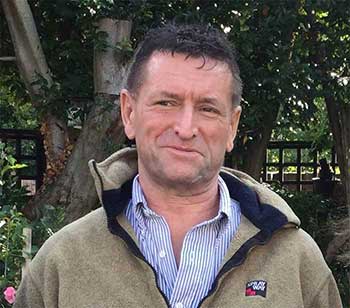
A Living Guide to the Culture, History and People of East Africa’s Greatest Civilisation — by Steve Braker, Mombasa
The Swahili Coast is not a country. You will not find it on most maps. It is a long, extraordinary strip of the East African shoreline — running from southern Somalia down through Kenya and Tanzania to northern Mozambique — together with a scattering of islands that includes Mombasa, Zanzibar, Lamu, and Pemba. It is the place where Africa met Arabia, Persia, India, and China, and the collision produced one of the most remarkable cultures on earth.
Most people who visit East Africa spend their time in the interior — the game parks, the Serengeti, the Masai Mara. And those are magnificent. But the coast is where the real story is. This is where the history began, and where it is still being written every single day. This guide to Swahili Coast history and culture is my attempt to introduce you to it properly. I will add to it as long as I am here to do so.
The People of the Swahili Coast: Who Are They?
The word Swahili comes from the Arabic sawāhil, meaning “the coasts.” The people of this coast have been calling themselves by various names for centuries — the Waungwana, the civilised ones, being the proudest — but to the rest of the world they became the Swahili.
They are a Bantu people at their roots. Long before the Arabs arrived with their dhows and their religion, Bantu-speaking farmers and fishermen had already settled this coast, building communities from the coral and mangrove of the shoreline. Archaeology at Fukuchani on Zanzibar shows settled communities here from at least the sixth century AD. These were not primitive people scratching in the dirt. They were already trading, already building, already watching the horizon.
Then, from around the eighth century onwards, the Arab and Persian traders arrived — and everything changed. The great coastal city-states began to rise: Mombasa, Kilwa, Lamu, Malindi, Pate, Zanzibar. These were not Arab colonies. They were African cities that absorbed, traded, and eventually intermarried with the incoming peoples, creating something entirely new. By the tenth century they were some of the wealthiest urban centres on the Indian Ocean. Kilwa was described by the Moroccan explorer Ibn Battuta in 1331 as one of the most beautiful cities in the world.
The Swahili are the product of that long, multi-directional exchange. Muslim, cosmopolitan, African at the bone, and utterly unlike anywhere else on the continent.
The Language of the Swahili Coast: Kiswahili
You cannot understand the Swahili Coast history and culture without spending time with the language. Kiswahili is the mother tongue of this coast and the lingua franca of an area stretching from the Democratic Republic of Congo to Uganda to Rwanda. Over 200 million people speak Kiswahili across East and Central Africa, making it one of the most widely spoken languages on the continent.
It is a Bantu language in its structure — its grammar, its noun classes, its verb patterns are all unmistakably African. But centuries of trade brought Arabic words flooding in, along with Persian, Hindi, Portuguese, and eventually English and German words from the colonial period. The result is a language that carries its own history inside it. When I say shule (school) I am speaking a word the Germans left behind. When I say meza (table) I am using a Portuguese word. When I say sukari (sugar) I am reaching back to Arabic. Every sentence is a small piece of archaeology.
Essential Swahili Coast Words and Phrases
Jambo — Hello (the tourist version; locals say Hujambo or simply Mambo)
Hakuna matata — No problem (yes, it is real, and yes, the film ruined it)
Pole pole — Slowly slowly — the entire philosophy of the coast in two words
Karibu — Welcome — you will hear this everywhere, and it is always meant
Shukrani — Thank you
Bahari — The sea
Pwani — The coast
If you ever find yourself in Mombasa or Zanzibar, learn these words before you arrive. The reaction you will get from the locals is worth every minute of effort.
Mombasa: The Heart of Swahili Coast History
I am biased, because Mombasa is my home. But I would argue that no single place on the Swahili Coast carries more history in a smaller space than Mombasa’s Old Town.
The island of Mombasa has been a working port for at least eight hundred years — possibly much longer. Roman coins have been found in the region. Greek merchants mentioned a port they called Rhapta in the first century. By the time the Portuguese arrived in 1498, Mombasa was already a wealthy, sophisticated city with its own sultan, its own trade networks, and absolutely no interest in being conquered.
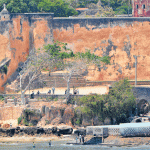
The Portuguese built Fort Jesus in 1593 to anchor their control of the coast. It still stands today, an enormous coral-stone fortress at the entrance to the old harbour, and it is one of the finest examples of Portuguese military architecture anywhere in the world. Fort Jesus was designated a UNESCO World Heritage Site in 2011. It changed hands nine times over the centuries — Portuguese, Swahili, Omani, British — each time after extraordinary sieges that would fill several novels. (Several of my novels, as it happens.)
Old Town itself is a maze of narrow streets, carved wooden doors, crumbling coral facades, and the smell of frying cassava and wood smoke. The doors alone are worth a visit. Swahili carved doors are famous across the world — enormous studded brass affairs, some of them centuries old, each one a statement of the wealth and status of the family within. My wife Pauline and I walk Old Town regularly. It is one of those places that gives up something new every time.
The Indian Ocean Trade: The Engine of Swahili Coast Culture
The wealth of the Swahili Coast was built on trade, and the trade ran across the Indian Ocean in both directions for over a thousand years.
From the African interior came gold, ivory, iron, timber, and — to the great shame of this coast’s history — slaves. From across the ocean came ceramics, textiles, glassware, spices, and manufactured goods. Chinese porcelain has been found in significant quantities at Kilwa and other Swahili Coast sites, testament to trade routes that reached all the way to the Ming dynasty.
The engine of this trade was the monsoon wind. The Kaskazi — the north-easterly — blows from November to March, pushing the Arab and Indian dhows down to the African coast. The Kusi — the south-easterly — arrives in May and blows them home again. The Swahili sailors knew these winds intimately, named them, planned their entire year around them. I still use those names today on my boat in Mtwapa Creek.
The dhow itself deserves a chapter of its own. These sail-powered wooden vessels, assembled with stitched coconut rope and no metal fastenings in the old style, have been crossing the Indian Ocean for over a thousand years. They are still sailing today. There is something quietly astonishing about watching a dhow tack across the channel off Mombasa in the late afternoon — the same shape against the same sky that traders have been watching for centuries.
The Slave Trade: The Dark Side of Swahili Coast History
No honest account of the Swahili Coast can skip this. The Arab slave trade was one of the largest and longest-running in human history, and Zanzibar was its nerve centre. At the peak of the nineteenth century, estimates suggest over 50,000 enslaved people a year were passing through Zanzibar’s market alone. They came from as far as the Congo and the Great Lakes, marched to the coast by traders, and then shipped to the Gulf states, Persia, and India.
The most famous and feared of the slave traders was a man called Tippu Tip — born Hamad bin Muhammad al-Murjebi in Zanzibar around 1837 — who built a personal empire in central Africa that made him one of the most powerful men on the continent. He was intelligent, charming, multilingual, and utterly ruthless. He is one of several historical figures who has crept into my fiction, and he deserves far more attention than he gets in the English-speaking world.
The British finally suppressed the Zanzibar slave market in 1873 under pressure from David Livingstone and others, though the trade continued illegally for decades. The Cathedral Church of Christ in Zanzibar’s Stone Town now stands on the exact site of the old slave market. The altar is positioned where the whipping post stood.
Swahili Coast Culture: What You Will See and Hear
Architecture
Swahili towns are built from coral rag stone, cut from the reef. The upper-class houses — the nyumba za mawe, stone houses — are multi-storey, with internal courtyards, arched niches in the walls, and those extraordinary carved doors. The poorer buildings are timber and mud plaster — nyumba za udongo. Both styles are cooling in the tropical heat, designed by people who understood the climate.
Food
Swahili cuisine is one of the great underrated food cultures of the world. Coconut milk goes into almost everything — rice (wali wa nazi), curries, stews. Pilau rice, scented with cardamom and cloves, is the prestige dish at any celebration. Biryani arrived with the Indian traders. Samosas — sambusa here — are sold at every street corner. Freshly grilled fish with tamarind sauce at a beach shack in Mombasa is one of the finest meals I have ever eaten, and it costs almost nothing.
Music
Taarab is the sound of the coast — a haunting blend of Arab melody, Indian rhythm, and Swahili poetry, played on oud, violin, and percussion. It is the music of weddings, celebrations, and late evenings. If you hear it drifting out of an Old Town window at night, stop and listen.
Religion
The coast is overwhelmingly Muslim — Sunni, mostly, with a culture of tolerance and sociability that would surprise anyone who only knows Islam from a newspaper. The call to prayer from the mosques of Old Town Mombasa at dawn is one of the more beautiful sounds I know. Friday midday sees the streets empty as the men go to prayer. Ramadan brings the coast alive after dark — the best street food of the year appears, and everyone seems to be out until midnight.
The Kanga
Every Swahili woman wears kanga — a brightly coloured printed cloth worn as a wrap. Each kanga has a Swahili proverb printed along its edge. I once met an old woman in the bazaar in Stone Town whose kanga read: Una piga guitar na mbuzi — “You are playing a guitar to a goat.” When I asked what it meant, she looked at me with enormous pleasure and said, “It means it is a waste of time talking to stupid people. Are you stupid?”
I have been trying to match that line ever since.
Why Swahili Coast History and Culture Drives My Books
Every William Brody novel is set here, or set against this history. The slave trade runs through African Slaver. The ivory trade and the Tana River run through African Ivory. The First World War in East Africa runs through African Vengeance. And the Jinn — the spirits of Swahili folklore — take centre stage in African Jinn.
I write about this coast because I live here. But also because almost no Western fiction writer is doing it justice. There is an extraordinary world here that most readers have never encountered, and it deserves to be told.
If you would like to come on that journey with me, start with the first book — it’s free.
What’s Coming in This Series
This is a living article. I will be adding to it over time. Topics I intend to cover next include:
- The Portuguese and the battle for Fort Jesus
- The great explorers: Livingstone, Burton, Speke, and Stanley
- Life on a Swahili dhow
- The Mijikenda — the nine tribes of the Kenyan coast
- The Jinn and the spirit world of the Swahili
- Zanzibar: the spice island and the stone city
Tutaonana baadaye — See you later.
Steve Braker
Mombasa, Kenya