Fort Jesus Mombasa: The Fortress That Changed Hands Nine Times
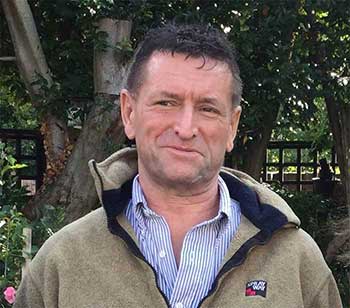
By Steve Braker — Mombasa, Kenya
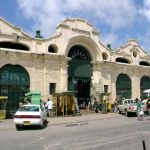
I walk past Fort Jesus Mombasa most weeks. From the waterfront road it dominates the old harbour entrance the way it has always done — immense, low, and coral-coloured, looking like something that belongs in the Mediterranean rather than East Africa. After twenty-five years I still stop to look at it sometimes. It has that effect on people. The history of Fort Jesus is longer, bloodier, and more extraordinary than almost any fortress story on this continent, and most of the people who visit it have no idea what actually happened inside those walls.
This post is my attempt to fix that. I am writing it from Mombasa, where I have lived since the late 1990s, and where Fort Jesus history has been seeping into my novels ever since. If you want the deeper context of the Swahili Coast that produced this fortress, start with my full guide to Swahili Coast history and culture. But if you want the story of Fort Jesus itself — the Portuguese, the sieges, the Omani Arabs, and the thirty-three survivors — read on.
Why the Portuguese Needed Fort Jesus Mombasa History to Begin at All
Vasco da Gama arrived on the East African coast in 1498, and his reception was not universally warm. Mombasa, already a prosperous Swahili city-state with its own sultan and its own trade networks, had no particular desire to be absorbed into a Portuguese empire. Da Gama was met with suspicion, a minor skirmish, and a swift departure. He got a better welcome further north at Malindi, whose ruler was happy to gain a powerful ally against his rival in Mombasa.
The Portuguese spent the next century trying to dominate the Indian Ocean trade routes by force — taxing Arab and Indian merchants, sinking ships that refused to pay, and bullying their way along a coast that had been doing business perfectly well without them for a thousand years. They were not popular. Mombasa was attacked and sacked by Portuguese forces in 1505, 1528, and 1589. Each time, the city recovered. Each time, the Portuguese found that controlling the coast from ships alone was not enough.
In 1593, the Portuguese Crown decided to build a permanent fortification. The site chosen was the coral headland at the southern entrance to Mombasa’s old harbour — commanding both the sea approach and the town. UNESCO, which designated Fort Jesus a World Heritage Site in 2011, describes it as one of the most outstanding and well-preserved examples of Portuguese military architecture from the sixteenth century. It was designed by an Italian architect, Giovanni Battista Cairati, working within the new science of fortification that had emerged in Renaissance Italy to deal with the age of cannon. The walls were built low and angled — not to look impressive, but to deflect artillery fire. Fort Jesus was not built to be beautiful. It was built to be impossible to take.
The irony is that it was taken eight more times.
What You See When You Walk Into Fort Jesus Today
The fort is built from coral rag stone — the same material as the old buildings of Mombasa’s Old Town. It is roughly rectangular, with four great bastions projecting from the corners, each named after a saint. The main gate faces north, into the town. Inside there are barracks, a church, cisterns for fresh water, and the remnants of buildings from multiple different eras — Portuguese, Swahili, Omani, and British layers laid on top of each other like sediment.
The walls carry graffiti scratched by sailors and soldiers going back to the 1590s. Portuguese coat of arms. A drawing of a sailing ship. A crucifix. An Arabic inscription. You can put your hand on these marks and feel something that is not quite a chill but is close to one.
One of the most striking features is the Captain’s House — the residence of the Portuguese commander — with its arched doorways and tiled floors, much of it still intact after four centuries. The Fort Jesus Museum, now managed by the National Museums of Kenya, houses an extraordinary collection of Chinese porcelain, Swahili ceramics, and artefacts recovered from the site and from a Portuguese shipwreck in the harbour. The porcelain alone tells you everything about how connected this coast was to the wider world long before anyone in Europe had heard of it.
The best time to visit is early morning, before the tour groups arrive. Go on a weekday. Walk the ramparts when the light is coming off the harbour and the dhows are moving in the channel, and you will understand exactly why people fought so hard and for so long to control this place.
Fort Jesus Mombasa History: Key Dates at a Glance
1498 — Vasco da Gama arrives on the East African coast. Mombasa is unimpressed.
1505–1589 — Portuguese sack Mombasa three times. The city keeps recovering.
1593 — Construction of Fort Jesus begins. Designed by Italian architect Giovanni Battista Cairati.
1631 — Sultan Muhammad Yusuf leads a revolt, massacres the Portuguese garrison, and briefly holds the fort. Portugal retakes it the following year.
1696–1698 — The Great Siege. Omani Arabs besiege Fort Jesus for 33 months. The Portuguese garrison slowly dies of plague and starvation. Thirty-three survivors hold out until December 1698, when the Omanis finally break through.
1728 — Portugal briefly retakes the fort with a fleet. The Omanis recapture it within a year.
1895 — Britain takes control. Fort Jesus becomes a prison under the British East Africa Protectorate — a function it serves until 1958.
2011 — UNESCO World Heritage Site designation.
The Great Siege: Fort Jesus Mombasa History at Its Most Extraordinary
Of all the episodes in the Fort Jesus Mombasa history, the Great Siege of 1696 to 1698 is the one that stops me every time I think about it. It lasted thirty-three months. Let that settle for a moment. Two years and nine months of siege, in a coral fortress, on a tropical island, with plague running through both the defenders and the besieging army.
The Omani Arabs from Muscat had been expanding their power along the East African coast for decades, pushing the Portuguese back at every point. In March 1696 an Omani fleet appeared off Mombasa and began the siege of Fort Jesus. The Portuguese inside were already few in number. Relief fleets came from Goa — India’s Portuguese capital — twice, and both times arrived, stayed briefly, skirmished, and withdrew without breaking the siege.
Inside the fort, plague was killing the defenders faster than the Omanis were. By the end of 1698, records suggest that only around thirty-three people remained alive inside the walls — a mix of Portuguese soldiers, Swahili converts to Christianity, and a handful of Indian traders who had been caught inside when the siege began. On the night of 12 December 1698, an Omani soldier reportedly slipped inside the fort through a gap in the walls, found the defenders asleep or too weak to resist, and opened the gates. The siege was over.
Portuguese power on the East African coast effectively ended that night. They held on briefly — retaking the fort in 1728 before losing it again in 1729 — but the great era of Portuguese dominance of the Indian Ocean was finished. The Omanis controlled the coast for the next two centuries, and it is their influence — in the architecture of Old Town Mombasa, in the carved doors, in the Islam that took such deep root here — that you feel most strongly today.
The history of the Portuguese period on this coast, including Fort Jesus, is covered in some depth in Britannica’s entry on Mombasa, which is worth reading alongside a visit to the fort itself.
The Revolt of 1631: When the Fort Jesus Mombasa History Turned Inside Out
Before the Great Siege, there was a more intimate betrayal. In 1631 the Portuguese-appointed Sultan of Mombasa — a man called Muhammad Yusuf, who had been educated in Goa and converted to Christianity under the name Dom Jeronimo Chingulia — invited the Portuguese Captain of Fort Jesus to a feast. The Captain came. Muhammad Yusuf killed him personally, along with the entire Portuguese garrison, on a single night. He then reverted to Islam, raised the Swahili and Arab population of Mombasa, and held the fort for several months before eventually sailing away with a fleet of followers to join the Omani Arabs.
He was never caught. He vanished into the Indian Ocean world and the historical record loses him somewhere off the coast of Arabia.
It is one of the great untold stories of this coast, and I have been keeping it in a drawer for years. The collision in a single man between Swahili Africa, Portuguese colonialism, Islam, and Christianity — the education in Goa, the return to Mombasa, the killing — it is extraordinary material. One day it will become a novel. For now, it sits in the Fort Jesus Museum as a few paragraphs on a wall panel, passed over by visitors who are busy photographing the cannon.
How to Visit Fort Jesus Mombasa: Practical Notes
Getting There
Fort Jesus sits at the southern end of Mombasa’s Old Town, on Nkrumah Road, at the edge of the old harbour. It is impossible to miss — you can see the bastions from the Likoni ferry approach. From the city centre, it is a short tuk-tuk (three-wheeled taxi) ride, or a twenty-minute walk through Old Town, which is itself worth doing. Walk through the narrow streets, past the carved doors and the coral-stone facades, and arrive at the fort already understanding something of what it was protecting.
The Museum
The museum inside Fort Jesus is genuinely excellent — one of the best in East Africa. The collection of Chinese porcelain from the Swahili Coast sites is remarkable, and the material from the Portuguese shipwreck Santo António de Tanna, which sank in the harbour in 1697 during the Great Siege, is unique. The ship has been excavated over several decades and artefacts are still being conserved. Allow at least two hours to do the museum justice.
Combine It With Old Town
Fort Jesus and Mombasa Old Town should always be done together. The fort gives you the political and military history; Old Town gives you the living culture that survived all of those power struggles. Start at the fort in the morning, walk Old Town at noon when the light is extraordinary on the coral facades, and find somewhere in the shade for chai (tea) and mandazi (fried doughnuts) at midday. You will not regret it.
For the broader context of everything you will see in both places, my Swahili Coast history and culture guide is the place to start. And for more on the Mombasa books on my reading list, see my post on the best books to read before visiting East Africa.
Fort Jesus Mombasa History and My William Brody Novels
I write action thrillers set on this coast, and Fort Jesus Mombasa history runs through the landscape of every one of them. The fort appears physically in several of my William Brody novels — you can stand on those ramparts in the pages of African Slaver and feel the same harbour wind that the Portuguese garrison felt in 1698. That is not an accident. I live five minutes away. I know what the light does in the late afternoon on those coral walls.
The first Brody novel, African Slaver, is free. It will introduce you to the coast, the culture, and a character who understands this world from the inside out — which is, I hope, how I write it. You can get it at the link below.
If you are planning a visit to Mombasa and want to arrive with your head already full of this history, start with the book. Fort Jesus will mean something entirely different to you when you walk through its gate.
Start the Journey — African Slaver Is Free
Every William Brody thriller is set on this coast. The slave trade, the ivory trade, the First World War in East Africa, the Jinn of Swahili folklore — it is all here, in the places I walk every day. The first book is free, and it begins, as this history does, on the shores of the Indian Ocean.
If Fort Jesus Mombasa history has caught your attention, the novels will take you deeper into this world than any guidebook can.
Tutaonana baadaye — See you later.
Steve Braker
Mombasa, Kenya