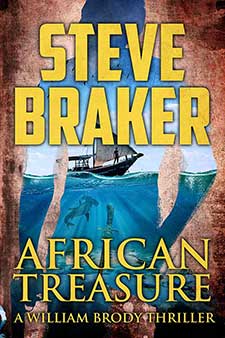

I know you are all interested in reading books, on or about Africa, so here is one you might like. It’s called Hunting Teddy Roosevelt and is available on Amazon-It’s not cheap!
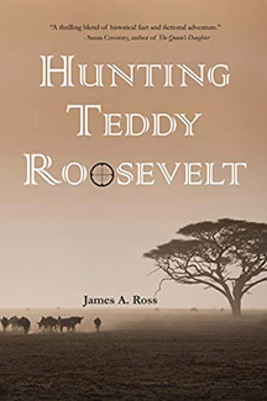
The story is about Teddy Roosevelt’s safari from Mombasa to Khartoum in the early 1900s. He has finished his term as president and needs to get away for a year. To do this, he gets a museum in the U.S. to sort of sponsor him. Although there are people at home that would rather, he did not come back! The book is interesting and covers a lot of Africa in one book. He manages to walk through Kenya, Tanzania, Uganda, Congo, and Sudan, which is a bit much in a year. There are some great adventures he gets up to on his trek. The story is well written and easy to read, which I always enjoy. If you want to have a look, the links to the U.S., U.K. And A.U. sites are below:
U.S. Link, the link for UK amazon and Amazon AU. It is also available at Barnes and Noble. Let me know if you read the book I’m always interested in chatting about books.
As usual, I’m working on Brody and his crew’s new adventure. The working title is African Jinn. The book is fun to write, but as usual life and making a living get in the way. Unfortunately, I have to keep putting it down to get other paying projects done. When I do get time, I enjoy researching Swahili history and culture, as it will form a large part of the story. I also hate it when I read books that are obviously historically incorrect. I find this stuff fascinating, and I often fall down a rabbit hole and then pop up several hours later when my wife is calling me for dinner, and I haven’t written a word!
The Swahili Tribe of Africa
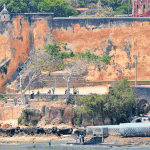
I became interested when I visited Jumba Ruins in Mtwapa a month ago. Since then, I have been chasing leads and finding out some amazing stuff about the Swahilis and how the tribe developed. The first actual written document called The Periplus of the Erythrean Sea, a mariners travel guide, was written in 40 AD. This was when the Roman Empire was at its height. The guide describes large flourishing towns and villages spread along the coast from the Horn of Africa all the way down to Mozambique.
The language at that time was Bantu, which spread from somewhere in the Congo basin and has touched all areas of Central Africa.
Another Islamic biographer wrote about Mogadishu in the 13th century. He described it as the frontier between Barbar and Zanja. He also visited Zanzibar and Pemba Islands.
This is what fascinates me about the history and culture of this wonderful tribe. They have been around for as long as the Romans, and they are still here, doing exactly what they were doing back then. Few civilizations can claim such a long run. The Swahili tend to absorb rather than quarrel. When the Arabs turned up on mass in AD 996, they assimilated with them. Intermarrying and taking their culture and language, even their religion. There is a mosque on Pate Island – part of the Lamu Archipelago, which has been carbon-dated back to the 8th century. The first mosque was wooden, but since then mosques have been built on the exact spot.
The Swahilis seem to be fantastic at this idea of taking the best for themselves. There are so many words in Swahili that come from Arabic, Ancient Greek, Hindi, Japanese, German, and English to name but a few.
When the Portuguese turned up in the 16th century, they found that trade with other countries and even the Silk Road was very well established. They attempted to overrun the coastal towns and cities, but didn’t make any tangible inroads, and backed off to Mozambique where they settled. The Swahili traders moved further North and used smaller ports and islands. The Portuguese just did not have the manpower or ships in the area to be able to control the seafarers.
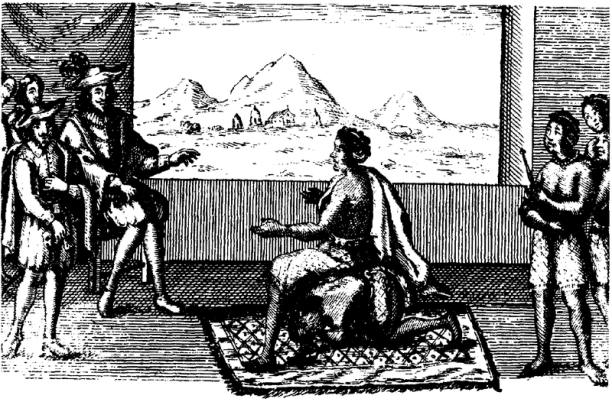
This led to more integration and more development of the Swahili language; every time someone tries to invade or overrun, all they do is end up giving something to the local people and so growing the culture.
I think the rest of the world could take some lessons from this group. They have never really fought with other nations; they allow strangers in and accept them. Then learn from them and grow to be better people. In this modern age, we live in, where everyone is trying to tell us how to act and what to believe in; maybe taking a few pages from the Swahili book would be a good idea. Accept what comes. Greet the person who arrives on your shores and then learn what you can from them to develop your own people.
This might be a bit of a romanticized version of the history, but hey, I’m a writer of fiction. I’m allowed to twist the history of this tribe into my own imagination and follow what pops out!
Well, that’s all for this month. I have to get back to Brody and his genies. Currently, he’s in Zanzibar in the Masingini forest, looking for Hassan’s sister.
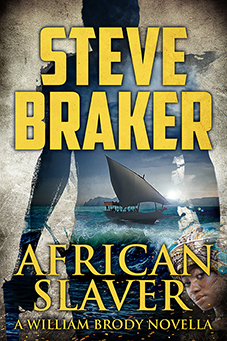
One last ask. I would be so grateful if you were to share this newsletter with any friends, family, or colleagues that you think would appreciate it. Indie authors do not have a publishing company backing them, so we have no big marketing budgets and talk show appearances to promote our books. If you can think of anyone who would enjoy African Slaver, for free, please send them this email and ask them to click on this link to get the free book. Click Here for Your Free Book.
For loads of useful information on African Safaris and Africa in general just click here
If you would like to get in contact with me then click here
Below are some more useful links about Safaris in Africa- Enjoy!
Top Tips for an African Safari and Beach Holiday
African Safari Which is the Best Country to Choose and Why?
Top Tips for the Perfect African Safari Vehicle
The Naming of Kenya-How and Why!