The Luo tribe, a fascinating group within the Nilotic people, are descendants of a group that originated in Sudan. The term ‘Nilotic’ refers to the river Nile, the people who live close to it, or the languages they speak, as defined by the Cambridge Dictionary.
The history of the Nilotic people is diverse and well-recorded. They are divided into three distinct groups based on language:
Easter Nilotic-Is spoken by people in southwestern Ethiopia, eastern South Sudan, northeastern Uganda, western Kenya, and northern Tanzania; this includes but is not specific to Turkana and Maasai.
Southern Nilotic—This group includes Kalenjin and Datog. It is spoken by the Nilots in western Kenya, northern Tanzania, and eastern Uganda.
Western Nilotic- is spoken by the Nilotic people of South Sudan, northeastern Congo (DRC), northern Uganda, southwestern Kenya, northern Tanzania, and even as far as southwestern Ethiopia. This group includes Dinka-Nuer, Lou, and Burun Languages.

For this blog, I will concentrate on the Western Nilotic group in Kenya, but I hope to write about the others in the future.
The history of the Luo is a bit difficult to follow as it was handed down from generation to generation orally. But the story goes that there was a massive exodus from Bahr-el-Ghazal, South Sudan, in the 14th or 15th century during the Muslim Conquest of Sudan. A great leader called Nyikango is said to have led his people, called the Shilluk (or Chollo ), along the Nile after arguing with his brother. This tribe flourished and continued wandering along the river Nile’s banks. They would break apart due to lack of food or feuding and continue spreading across East and Central Africa. However, conflicting stories are backed with significant evidence that the Nilotic people left South Sudan and entered Uganda and Kenya as early as 1000AD, some five hundred years earlier. This is thought to have occurred during the collapse of the Christian Nubian kingdoms of Nobata, Makuria, and Alodia.
They seem to agree that the northernmost Luo people, the Shilluk, advanced north along the White Nile in the 15th or 16th century and conquered territory as far north as Khartoum. At the same time, the Luos, who ended up in Kenya, came south along the Nile.
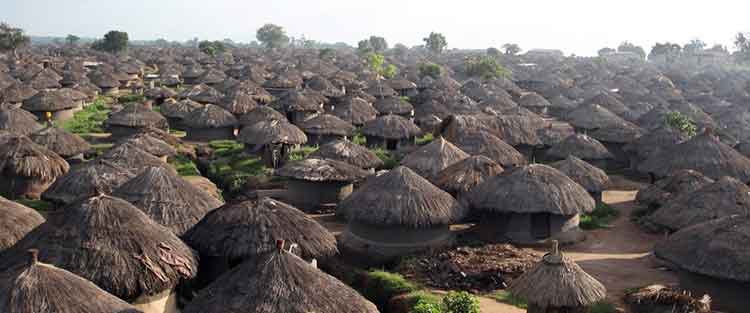
It is thought that the first group of Nilotic peoples entered what is now known as Uganda in the 1400s. They settled in the verdant area of northern Uganda. These people became known as the Acholis and are based around Gulu, their main modern town. If you are lucky enough to visit this area, you can still see the Acholis living in their roundovals with thick thatched roofs.
Again, various authors have conflicting views, but from my research, it seems that the Acholis split from the modern Lou sometime in the late 14th century. In the 15th century, a group called Jolou (aka Jalou, “people of Luo”) was led into Kenya by a chief called Ramogi Ajwang. The Joka Jok, as they were known then, settled at Ramogi Hill, Sakwa, Asembo, and Alego.
The Joluo or Jonagi/Onagi (a person who has his six lower teeth removed as a right of passage during puberty, or singularly as Jaluo, Jaonagi or Joramogi/Nyikwaramogi, which means Ramogi’s heirs harking back to the leader that led them to the lake. The Luos are interconnected via clans. These clans are not restricted to the modern-day borders created by the colonialists and stretch through Kenya and Tanzania. A Luo clan is called a Jur-Chol. The modern-day Kenya Luo community consists of 27 tribes, each composed of various clans and sub-clans.
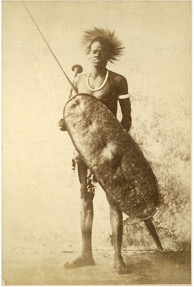
They immediately found Lake Victoria, which they called Nam Lolwe, meaning “endless lake.” When they arrived, it seemed like the water went on forever. The Jolou settled at the lake and became fishermen, which they are to this day. Since they arrived in Kenya over five hundred years ago, they have become very influential and are the fourth largest ethnic group in Kenya today. Other groups moved along the shores of the lake into Tanzania.
As the Luos moved through the area, they came into contact with many different people. The Batwa had been in residence on the Island of Mfangano since the Stone Age. The Urewe culture, which had been dominant in the area since 650 BC and was mainly centered around northern Nyanza, had a buoyant economy when the Lous arrived. This led to trade, conflict, and intermarriage, with cultural assimilation following as the tribes became increasingly mixed up. However, in many areas, the Lou tribe’s culture and language seem to have won the day.
Traditionally, the Lou were organized into exogamous clans consisting of several families headed by a clan elder. This tradition is followed to this day. When we meet another Lou person, they ask my wife, “Who is your father?” and then, “Who is your mother?” This continues until each party knows exactly how and if they are related. Once the relationship between the two Lous is established, any further business can be conducted. This is an excellent way to keep the gene pool clean.
The council of elders was under one supreme chief, a “Ruoth.” This group played the role of advisers to the supreme elder, not unlike the House of Congress or the UK Parliament. This tradition is still influential in Lou land, as we call it. Whenever there is a wedding or funeral, the elders are called to make all the final decisions and plan the event. They are especially involved in a woman’s dowry before she gets married. The dowries are still paid in cows to this day.
The language of Jolou is called Dholou, and it is part of the Nilotic language group. The word Nilotic means of or relating to the Nile River.
Interestingly, they are distinctly different from the Bantu and Cushitic languages. At least three independent groups seemed to have migrated from various areas to occupy Eastern Africa. The Nilotic tribes include the Maasai, Kalenjin, Dinka, and the Lou, to name just a few. The language is entirely different from Bantu and Cushitic, although the Jalou has assimilated many Bantu words into their version of Dholou.
Colonial Times
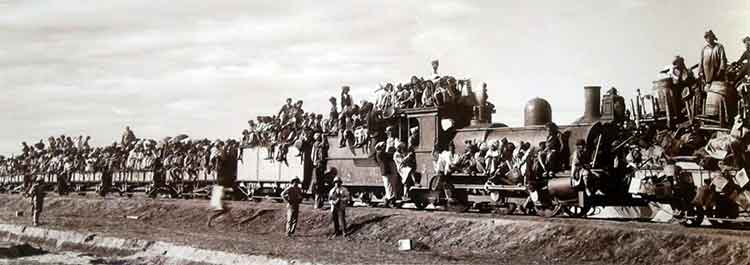
When the British first colonized East Africa, they largely ignored the Lou tribe as they were too far west to bother with. It was only when Sir Winston Churchill decided to build the Lunatic Express from Mombasa to Lake Victoria that the British became interested. In 1896, several skirmishes were mounted by the British in support of the Wanga ruler Mumia in Ugenya against the Kager clan led by Ochieng Ger III. Ochieng fought bravely but was no match for the maxim guns and lost over two hundred tribesmen in a single action. Another 300 Lou tribesmen were killed in other actions led by Sir Charles Horbley when he confiscated cattle from the Lou homesteads for the Indian workers of the railway. The spiritual leaders watched these battles and then advised the clans to cooperate with the British rather than being annihilated by superior firepower. As the British spread across East Africa into the Lake region, they established regional headquarters in Mumias and Kisumu (then Port Florence). The British worked hard to submit the Luo to colonial rule, and within a few decades, traditional leaders and local tribal elders had been replaced by colonial chiefs.
It is unclear whether the Luos westernized due to colonial rule or because, as people who had traditionally traveled, they were used to assimilating with local tribes and cultures, so they just did the same with the British, taking the best and leaving the worst. My wife always says Dhluo is easy to translate into English, so maybe they found the similar sounds made in the language attractive and decided to take what they could from the British.
There were many minor Luo uprisings during the 1920s and 30s, culminating in the most famous Luo of all, Oginga Odinga. He started the Luo Thrift and Trading Corporation (LUTATCO) after noting the Luo business owners did not want to educate their families. Notably, the LUTATCO office was the first African-owned building in Kisumu Town. They also published African Nationalist newspapers, including Achieng Onekp’s vernacular paper Ramogi, which the colonialists considered radical. This was the beginning of the fight for independence from the British. Oginga Odinga was then appointed ‘Ker’ or Chief of the Luo Union, an organization set up to protect the interests of the Luo people. He then ventured into politics and joined the Kenya African Union. The party demanded, amongst other things, access to white-owned land. The party was multi-tribal, and a young Jomo Kenyatta was also a member and later would become the president of KAU in 1947 and then go on to be the first president of a free Kenya after independence. But this blog is not about Kenyan politics, so I will stop here!

The Lou’s have had a lot of famous people through the years, the most recent being Lupita Nyong’o, who won an Oscar for her role in 12 Years A Slave. Strangely, when I first visited Kenya with my first wife and daughter, we used to stay at the Nyong’o’s house, and Lupita would babysit my daughter Olivia. That’s about my only claim to fame! There is also, of course, President Barrack Obama, whose mother has a village not far from my mother-in-law in Siaya, and one of the great heroes, Tom Mboya, whose mausoleum you can visit on Rusinga Island.

If you would like to follow me on Instagram or Facebook, I post most days just click on the links to join the community.
For loads of useful information on African Safaris and Africa in general just click here
If you would like to get in contact with me then click here
Below are some more useful links about Safaris in Africa- Enjoy!
The Naming of Kenya-How and Why!