“Dr Livingstone, I Presume?”
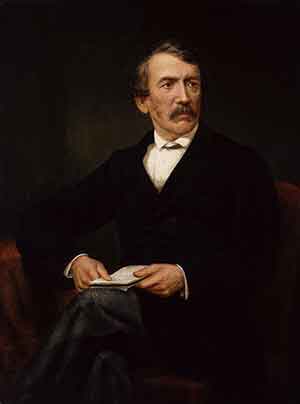
I have always admired Dr. David Livingston on many different levels. The iconic statement made by Henry Morton Stanley, “Doctor Livingstone I presume?” has become a household saying some one hundred and fifty years later. But the momentous moment when they met was more at the end of Livingstone’s life than the beginning.
During his life, Dr Livingstone was loved and hated by the British public. He had a sort of mythical status. He reminds me of the cool uncle we all had as kids, the one who would not fit in, and smelled of cigars and exotic places we could only dream of. He would disappear for months on end then turn up out of the blue.
David Livingstone was born in the mill town of Blantyre in Scotland on the 19th of March 1813. He was the second of seven children who all lived in a tenement building for the mill workers. At the age of ten, he started work in the mill as a piecer, tying broken threads on the spinning machines. He started work at six a.m. and had a twelve-hour shift. The piecers worked under the machines crawling around finding the broken threads and retying them. It seems this back-breaking work was not enough for young Livingstone as he attended the Blantyre village school after his long days at the mill.
Dr David Livingstone’s Early Life
At the age of twenty-one, he read a pamphlet from his local church and immediately saw his way to escape. The pamphlet was a call for missionaries to China, with a new concept of training the missionaries not only to spread the word of God but also to be trained as doctors. David Livingstone did not have the funds to run off to university and become a doctor, but he managed to make an agreement with the mill owners to work outside of term time to fund his adventure. By all accounts, Livingstone was an excellent student and studied medicine, chemistry, and theology. During his term time, he also became captivated by a Ralph Wardlaw an anti-slavery campaigner.
In 1840 Livingstone was licenced as a member of the Faculty of the Physicians and Surgeons of Glasgow and soon after was ordained as a minister of the church. At this point, Livingstone had already managed to achieve far more than most people of his time, but it was just the beginning.
Although Livingstone had initially responded to Gutzlaff’s call for missionaries to China his timing was off as the First Opium War was looming and China had closed its borders. The now Dr. David Livingstone was left in London wondering what to do and who to save! During the 1800s the missionary business was a big deal, much like the tele evangelist of today. There was a massive buzz around saving the world from slavery and introducing the poor lost souls to the word of God. The missionary institutions fed this fire and held huge meetings around the country proclaiming they were saving thousands of souls in lost far-flung areas of the world. This information could never be proven and was excellent for the coffers of the church. When I wrote about the naming of Kenya a couple of months ago, I mentioned Kraft and his mission where he only managed to convert two or maybe three members to the church during his whole time as a missionary. This was common, but not spoken about as there were other ideas a foot and Great Britain needed white faces on all of the continents of the world.

“By and by he asked me whether I thought he would do for Africa. I said I believed he would, if he would not go to an old station, but would advance to unoccupied ground, specifying the vast plain to the north, where I had sometimes seen, in the morning sun, the smoke of a thousand villages, where no missionary had ever been.”
Dr. Livingstone’s hatred of slavery combined with his lust for travel and a chance meeting on the 1st of June 1840 with Fowell Buxton, a very successful missionary, who made the case that all slavery would be ended if the chiefs of the tribes of Africa were exposed to the trade goods of Europe, and they could trade legitimately with the western world. This was to be Livingstone’s sole motivator for many years to come.
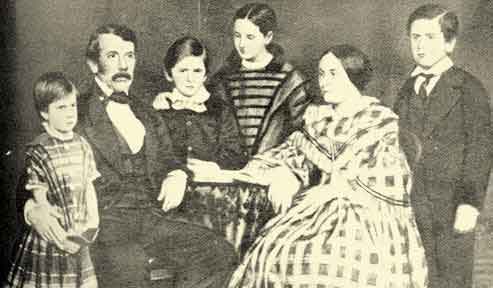
On the 17th of November 1840, Livingstone left London for the Cape of Good Hope. As a forever learner the voyage was not wasted on Livingstone. He learned Dutch and the Tswana Language of the tribes he was intending to convert.
On the 19th of May, he landed at Algoa Bay and then took an oxen car to the Kuruman Mission, the Moffats had not yet returned from the UK. Livingstone loved the life immediately; I feel an affinity with him here. I have found over the years people either see the wonder and beauty of Africa or the heat and disease. I was lucky from the moment I landed in Africa I knew it was the place I would be buried.
Dr Livingstone’s Marriage
The Moffats returned in January 1844, Livingstone rode out to meet them and travelled with them to bring them to the missionary. During the long days sat on the oxen cart Livingstone interrogated Moffat on the area. He also met his future wife Mary Moffat who had been born and raised in Africa. A unique experience for a young white English lady at that time. The oxen train travelled slowly across the plains and was an easy target for predators. On the 16th of February, a pride of lions attacked the convoy. Livingstone managed to get a shot off, but while he was re-loading the lion leapt onto him and tore at his arm breaking it. Mebalwe, another missionary, managed to distract the dying lion but was also bitten. The bravery of a native porter saved the day as he managed to spear the lion before it did any more damage. Livingstone was tended for the rest of the journey by Mary and a romance blossomed leading to their marriage in January of 1845.
However, Dr. Livingstone could not sit still and wandered around Southern Africa from mission to mission. His character was already proving to be very difficult, and he often fell out with the other missionaries and was asked to move on. In Kolobeng Mission where he settled for a couple of years, he managed to convert Sekeletu, chief of the Kololo, his only known convert. The chief had to be persuaded to give up three of his four wives and he agreed to become a Christian. However, the temptation was too great, and he lapsed within months of offering his life to Christ. This is an ongoing story throughout the missionaries of Africa, it makes me wonder how Christianity finally got such a foothold on this continent!
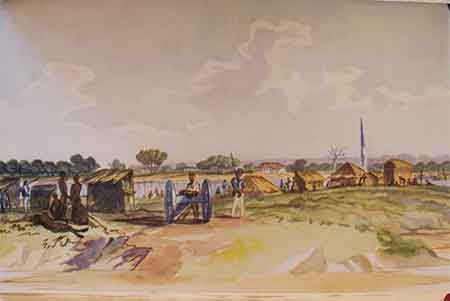
The Kalahari Desert Expedition
The next few years were spent exploring the Kalahari Desert and reaching Lake Ngami. He became a prolific writer and sent back very sympathetic descriptions of the land and people. He particularly underplayed the malaria attacks his group suffered. These notes from deepest darkest Africa became very popular with the British public, making Livingstone something of a hero. The Royal Geographical Society presented him with a chronometer watch which at that time was a fantastic gift enabling Livingstone to navigate across the continent. During this whole time, although he did preach the word of God and helped the locals with his medical skills, he is not remembered for converting a single person to God.
In 1852 Livingstone sent his family back to Britain and headed off into the interior once again, this time he was in search of a corridor to open up trade between the West and East Coast of Africa. He had heard of a river that could potentially become a “Highway” to the coast.
Victoria Falls
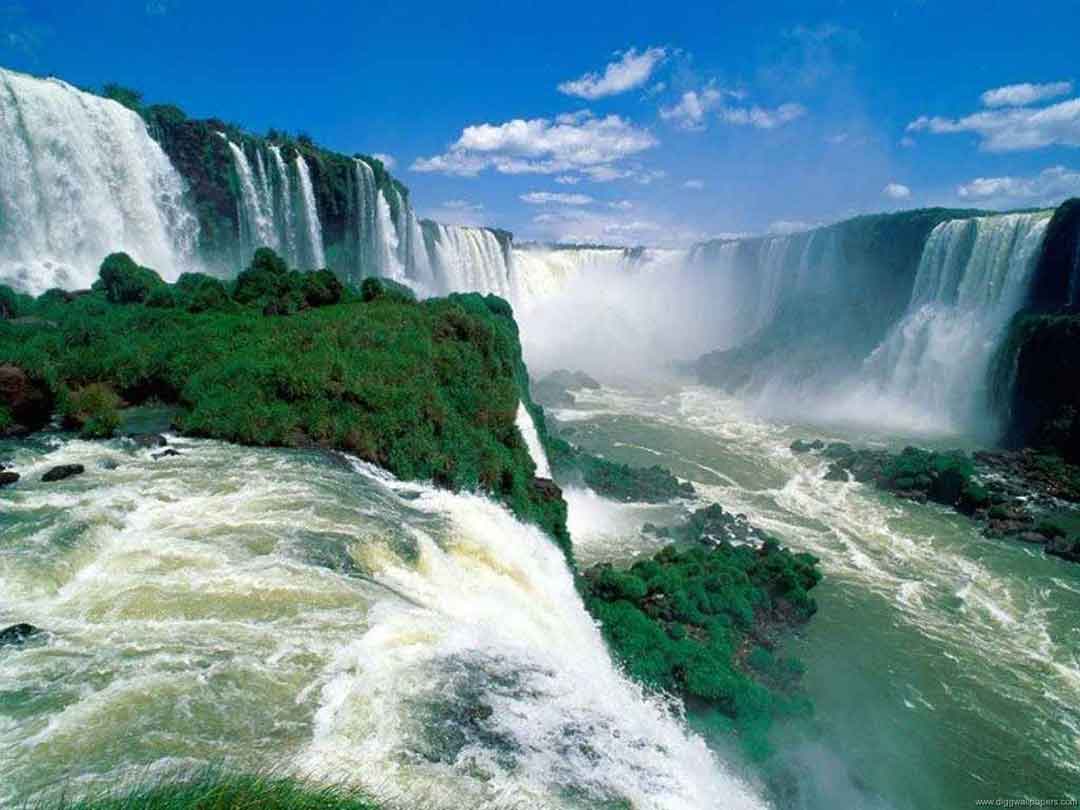
After finding the Zambezi River he trekked to the Atlantic and reached the Portuguese settlement of Luanda in May of 1854. He stayed in Luanda for a couple of months, but he decided that the route was way too difficult to create a trade route, so he decided to walk all the way back to the East Coast of Africa. This made him the first white man to traverse the African Continent at this latitude. He also came across his most famous discovery and was the first European to see the Mosi-oa Tunya (“The smoke that thunders”) waterfall which he promptly named Victoria Falls. When he reached the East coast at a town called Quelimane he felt he had found the route he was looking for.
Livingstone missed his family and needed a break from the trials and tribulations of Africa. He had suffered from malaria no less than forty times at this point. On his return to the UK, he found that although he was somewhat of a celebrity his family were living in poverty. To this end, he decided to write a book called “Missionary Travels” which was published in 1857. The book was an instant success, although it did paint a particularly pleasant picture of African life. He also pushed his agenda of commerce and trade from Europe and its ability to end the slave trade. Missionary Travels was so successful that the royalties would pay for his wife and children to live comfortably in the UK for the rest of their lives.
And so, the Zambezi River Expedition was born. The idea was to use a steamship to map the Zambezi from Marromue to the interior. Livingstone was given six other Europeans to help with the trip. They had a prefabricated ship called Ma Robert and a Colonial Steamer called the Pearl. The plan was to take both ships upriver and establish bases along the way to encourage trade and commerce. However, the expedition was way too complicated for Livingstone to manage, and he soon became embroiled in personal disagreements with the other members of the group. The river was also not in agreement with the plans as they soon came across rapids that were unpassable with, the steamer.
Although Dr. David Livingstone fought long and hard for the expedition, he even tried sailing along the Zambezi with smaller boats, but the waters were treacherous. After some six years of trying to find a good trade route into the interior, Livingstone was called back to London. When he returned, he was scorned as a failure and a fraud.
In January 1866 Livingstone had managed to find some private funding and returned to Zanzibar, where he met Tippu Tip. His mission on this occasion was to discover the source of the Nile. He struggled along the Ruvuma River, but his porters could not get along with him due to his bad moods and constant illness. Many deserted and fled back to Zanzibar where they reported he had died in the swamps around the river. However, Livingstone soldiered on and reached Lake Malawi on the 6th of August. He was one hell of a tough old bird. Livingstone managed to send word of his arrival and for the authorities in Zanzibar to send his supplies to Ujiji, he then headed West. However, by this time most of his porters had left and his medical supplies had been stolen. By all accounts, Livingstone was in a bad way and struggled to Lake Mweru. During his stay on the lake, Tippu Tu sent parcels of food and medicine to Livingstone which was a particularly difficult pill to swallow. The slave traders also helped him on many occasions to travel across hostile areas.
From this point, Livingstone was lost for almost six years. That is until Henry Morton Stanley was sent by the New York Herald to find him. Stanley was no fool and knew if he was able to find this legend alive then he would be set for life. He had ample funding and left Zanzibar with some two hundred porters. He trekked eight hundred miles into the interior of Africa following as closely as he could to Livingstone’s route. As he travelled, he sent back constant reports on his life in Africa the people, and the scenery. He became an instant hit in the US, but he knew he had to find Livingstone alive to make the story complete.

Stanely found Dr. David Livingstone in the town of Ujiji on the shores of Lake Tanganyika on the 10th of November 1871 and this is where the famous phrase was said, “Doctor Livingstone I presume?” It is said that the phrase haunted Stanley for the rest of his life. He had always suffered from a feeling of inadequacy and did not know how to meet such a famous, almost mythical man as Dr Livingstone. Due to nerves, and social and cultural practices of the time, he just blurted out the immortal words.
Stanley begged Livingstone to return with him to Zanzibar, but Livingstone refused, he knew he was dying and wanted to spend the last few years of his life in his beloved Africa.
The Final Safari
Dr. David Livingstone died of internal bleeding and dysentery, on the 1st of May 1873 in Chief Chitambo’s village at Chipundu, just southeast of Lake Bangweulu. The villagers removed his heart and internal organs and buried them under a tree near where he had died. Chuma and Susi, Dr Livingstone’s lifelong servants, then dried his body in the sun for two weeks. His body was carried 1,000 miles (1600 km) to the coastal town of Bagmoyo where it was loaded onto a ship and returned to London. He was then interred at Westminster Abbey and forever remembered as one of the greatest explorers of the time.
To me, Dr Livingstone was a man of his time. He doggedly fought the slavers and did his best to open up this difficult continent. A famous cartographer noted his failure many years later noting that the center of Africa is a raised ridge and any rivers heading for the ocean will have to come across large drops as they cascade from the escarpment, so he was doomed to failure from the start.
For loads of useful information on African Safaris and Africa in general just click here
If you would like to get in contact with me then click here
Below are some more useful links about Safaris in Africa- Enjoy!
Top Tips for an African Safari and Beach Holiday
African Safari Which is the Best Country to Choose and Why?
Top Tips for the Perfect African Safari Vehicle
The Naming of Kenya-How and Why!
Zanzibar Tanzania-A must for your Bucket List
A Trip to Monsoon Restaurant Mtwapa
Kerosene Harvesting Stories from Kenya
Mugged by a Trigger Fish Stories From Kenya
Mekatilili Wa Wenza Stories From Kenya