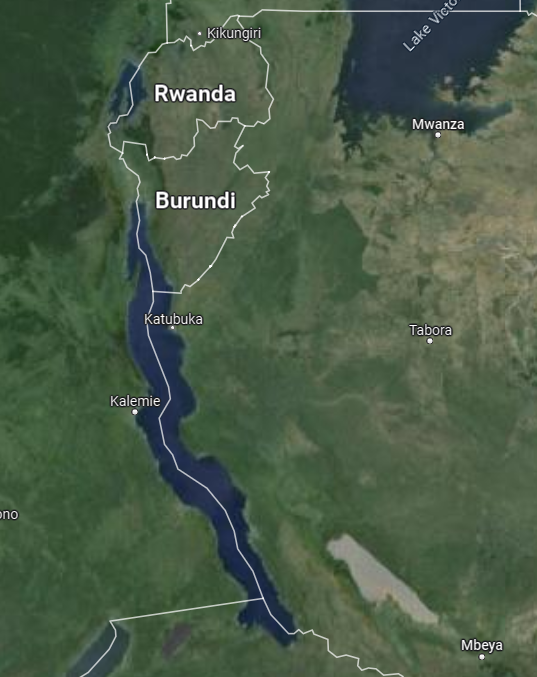
Lake Tanganyika: Africa’s Hidden Gem is an ancient African Great Lake, one of only twenty lakes in the world over a million years old. It is a marvel of nature. It emerged during the violent volcanic age when the earth was young and tearing itself apart, creating rifts and horsts that pierced the mantle, forming the backbone of the African continent. Narrow, deep, and long, it nestles in the Albertine Rift, one of the oldest rifts on the continent. It is encircled by towering mountain walls that plunge over 500 meters into the depths of the lake, finally coming to the palaeowater undisturbed for thousands of years, too deep for even oxygen to penetrate.
As far as records go, Lake Tanganyika holds many seconds, being the second largest freshwater lake and the second deepest freshwater lake, beaten only by Lake Baikal in Siberia. However, it holds first as the longest freshwater lake and is the largest rift lake in Africa. Amazingly, it holds 4,500 cubic miles of water, which amounts to 16% of the world’s freshwater supply, and has an average depth of 1,870 feet. The lake feeds the great Congo River, which eventually pours into the Atlantic Ocean. At least 90% of the water influx is from rain falling on the surface, and at least 90% of the loss is from direct evaporation. The unique ecosystem around the lake, created by the high water influx and loss, supports a diverse range of flora and fauna, including forests and grasslands which are home to thousands of critters, large and small.
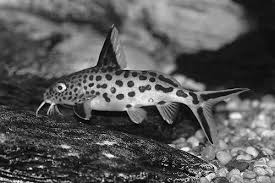
The lake boasts over 350 different species of fish; cichlids represent the most prominent species group in Lake Tanganyika. Many studies on the lake show the diverse range of cichlids that make the lake their home, and the way they have developed suggests the fish have been there for well over a million years.
Tanzania, the Democratic Republic of Congo, Burundi, and Zambia have the honor of bordering the lake, with Tanzania holding some 46% of the shoreline.
The name Tanganyika comes from Swahili. Tanga means sail, and nyika is an uninhabited plain wilderness. This creates the saying, “Sail in the wilderness,” which suggests the Swahili traders were using the lake much the same as they used the ocean for trade and commerce. However, when David Livingstone was living in Ujiji, at the behest of Tippu Tu, he noted the name “Liemba,” a word probably from the “Fipa” language for the southern section of the lake. Tanganyika also means “stars” in the “Luvale” language. One thing is for sure: the British did not manage to stick an English moniker on the lake! Tippu Tu, a notorious Swahili slaver and ivory trader, had a fort on the shores of Lake Tanganyika many years before Speke and Burton visited in 1858.
Tanganyika was first adopted to cover this area during the German East African colonization in the early 1800s. However, after the First World War, by the Treaty of Versailles (June 1919), the area was formally demarked on a map with ruler straight lines drawn by a cartographer, and ruled as a British Protectorate. It was not until December 1961 that Tanganyika became independent from British rule and renamed itself the Republic of Tanzania, leaving the lake as the last reminder of this time.
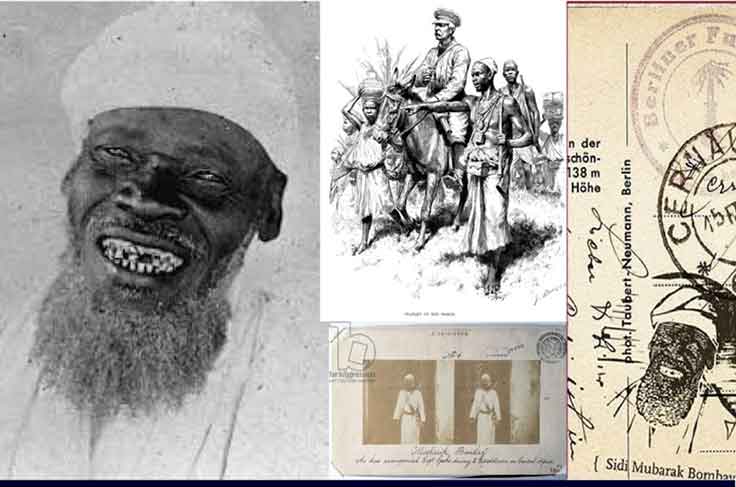
The first Victorian explorers were led to Lake Tanganyika by their Arab guide, Sidi Mubarak Bombay. Speke and Burton believed that the lake was the source of the Nile. They decided to explore. Speke, who was partially blind at the time, but was dispatched to find suitable transport as the inhabitants of Ujiji only had small canoes. Speke rowed across the lake to find some Arab slave traders to hire their larger vessels. However, he did not realize the lake’s size and became stranded on an island for several weeks. The story goes that a beetle crawled into his ear while he was sleeping on the beach and would not come out. In the end, he was forced to dig it out with his knife, and in the process, he became deaf in that ear. He was eventually rescued by a local tribe and returned to his partner. They then decided to use the smaller canoes and headed towards a river that the local inhabitants said was to the north. They rowed for weeks along the banks, finally coming to Ruzizi River, where they found it flowed into the lake not out! Its source was later found to be Lake Kivu, another of the Great Rift Lakes.
The history continues; during the First World War, the Germans dismantled two warships on the coast, then shipped them to Lake Tanganyika and reassembled them. This gave them a significant advantage over this part of East Africa. The British were not having it, and they decided to bring their gunboats. Whitehall hatched a cunning plan, and boats were dispatched to the Belgian Congo, where they were refloated and attacked the German battleship. But this is a wonderful story that I could not do justice to combine with Lake Tanganyika, Africa’s hidden Gem, so I will save it for the next time.

Since the end of the First World War, the Western World has largely forgotten the Lake. Today, the surrounding area has some ten million people from four countries. The primary industry is subsistence fishing, which is carried out mainly at night using floating lights to attract the many cichlids living in the deep waters. There is evidence that these fishing practices have been carried out since the Homo Sapiens arrived in the region during the Stone Age. The area around the lake is known as one of the poorest in the world, which is terrible, seeing as they live next to a natural wonder.
Happily, Lake Tanganyika: Africa’s Hidden Gem, is becoming more known with tourists. Lodges are popping up as the lake has up to 20 meters of visibility and offers a very different holiday for those among you who wish to stay off the beaten track. The nearest main airport is Dar-Es-Sallam, after which you have to take a one-hour plane trip and then a four-hour drive through the Katavi National Park to Kipili on the lake shore. You can even book a scuba diving trip to Lake Tanganyika, where you can swim in what they call “The Largest Fresh Water Aquarium in the World.”
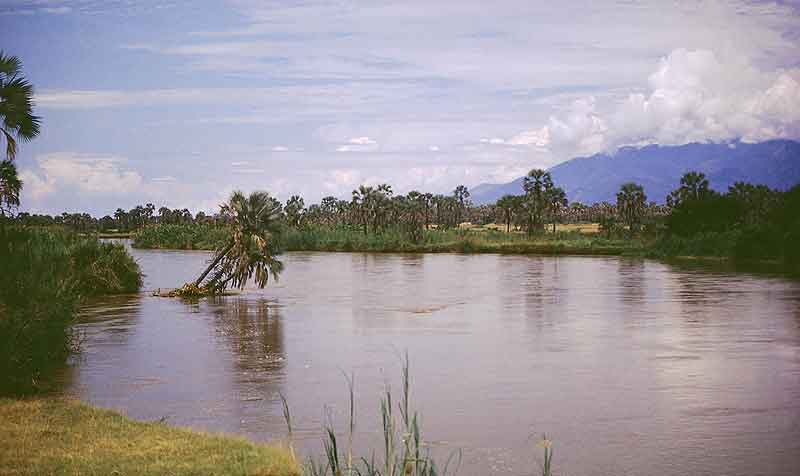
I am planning a visit soon as this place has intrigued me. The journey is daunting but from my research I believe it would be a trip of a lifetime.
I hope you enjoyed this soujourn into another fantastic place to visit in Africa.
If you would like to follow me on Instagram or Facebook, I post most days just click on the links to join the community.
For loads of useful information on African Safaris and Africa in general just click here
If you would like to get in contact with me then click here
Below are some more useful links about Safaris in Africa- Enjoy!
Top Tips for an African Safari and Beach Holiday
African Safari Which is the Best Country to Choose and Why?
Top Tips for the Perfect African Safari Vehicle
The Naming of Kenya-How and Why!
Zanzibar Tanzania-A must for your Bucket List
A Trip to Monsoon Restaurant Mtwapa
Lake Victoria | Ancient Rock Art