Rock Art at Mfangano Island
When you next visit Kenya, a great bucket list item to add to your list is the rock art cave paintings on Mfangano Island. I was very fortunate on my last visit to Kisumu to be able to take a trip out to Mfangano Island on Lake Victoria.
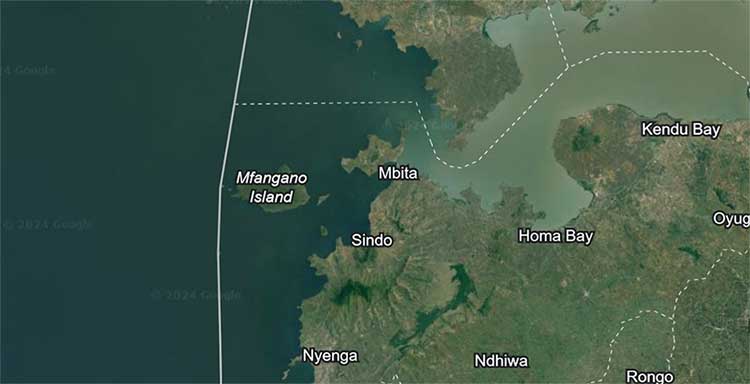
The Island is a forty-five-minute speed boat ride or a two-hour ferry ride from Mbita town, in the county of Homa Bay, on the shores of Lake Victoria. I wrote about the journey to Mfangano Island in an earlier blog post here.
Lake Victoria is the largest lake in Africa, and at 69,484km², is the second largest in the world by surface area. Lake Victoria sits in a volcanic depression on a plateau between the eastern and western branches of the East African Rift Valley. Lake Victoria is a seriously underrated tourist resort for Kenya, Tanzania, and Uganda. If you are in the Masai Mara or Serengeti, it is an ideal side trip after your safari just to sit in awe at this massive water body at some 1,134 meters (3720 feet) above sea level. If you are interested in Lake Victoria I wrote a blog on the Great Victorian Explorers which you might find interesting.
There are many high-quality hotels in the fast-developing town of Kisumu where you can base yourself and explore the lake and surrounding countryside. If you still need a fix of wildlife, then Ruma National Park is one of the main attractions just one and a half hours from Kisumu town. This is a lesser-known park which is not as touristy as the big ones. I personally find these small parks more intimate and less busy. If you like to sit and wait for the wildlife, rather than rushing around to see the lions and cheetahs it is a great option.

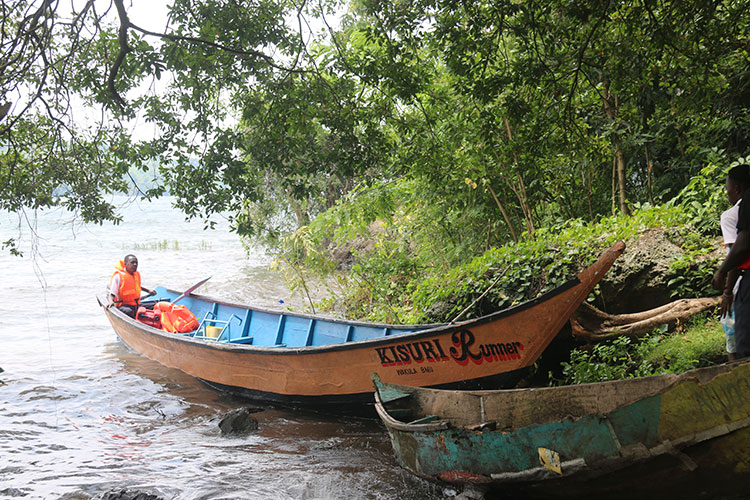
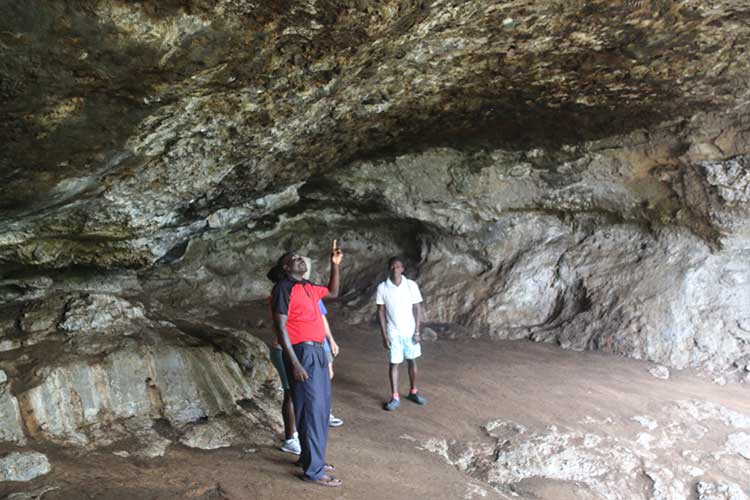
However, on this visit, I was heading straight to Mfangano Island. We took a boat from the jetty at Kisuri Resort and headed around the island. The caves we were visiting are known as the Mwanaga Caves, and they are a UNESCO World Heritage site due to the ancient rock art daubed on the walls between 2000 and 4000 years ago. We alighted from the canoe and climbed a steep rocky slope through the dense undergrowth for fifteen minutes then we reached a bluff on the headland of the island, we turned inland and climbed a final very steep muddy slope to reach the entrance of Mwanaga cave. Mwanaga is a large bright cave with a low roof that slopes to the rear. The entrance is about 18m across, and the cave stretches back 12 meters. The ground is littered with wild goat spores as they use the cave to shelter from the rains. On the left, as you walk in are a series of concentric circles painted in a brown and white pigment. According to the studies by the British Museum and UNESCO, they are finger paintings that denote the sun and the moon.
Our guide, Erastus, informed us that the paintings were created by the Echuya Batwa people, a Bantu-origin tribe that likely wandered down from the Congo in the great migration that occupied most of Africa some 2000 to 4000 years ago. The Batwa were commonly known as pygmies and are now a small group of people located near the Echuya Forest in Southwestern Uganda. However, they are renowned for this type of rock art and are known to have been in the area 2000 plus years ago.
Erastus told us of the Batwa then the Suba people who took over the island and finally the Lous who are the predominant population today. The caves were used until recently for rainmaking ceremonies. Erastus described the concentric circles as pictures of the sun and the moon. Local high-ranking witch doctors would come to the cave during times of famine and use the concentric circles to conjure up spells to either make it rain or if they were being attacked to create a famine for their attackers.
Mwanaga has an impressive view of a bay with an island in the center. Erastus explained that the island was blessed with being forever fertile, even when there was great famine or terrible weather the island always had food. The local folklore says the cave protects the island and makes the weather there ideal for growing the most important crops for the survival of the denizens of the island, as long as they regularly visit the cave and perform the correct rituals.
Due to the size of Lake Victoria, it has its own weather patterns which can conjure up some severe storms. While we were staying there were several major thunderstorms with amazing displays of lightning. Erastus explained that the paintings were also used to control where the lightning struck and when. He pointed to another island further from the coast of Mfangano explaining that at certain times of the year, the witch doctors would come to the cave and perform rituals to make sure the lightning only struck that particular island where no one has ever lived. He also added that if the island was being attacked the witch doctors, Magangas, were able to direct the lightning towards the enemy, like some sort of modern laser beam!
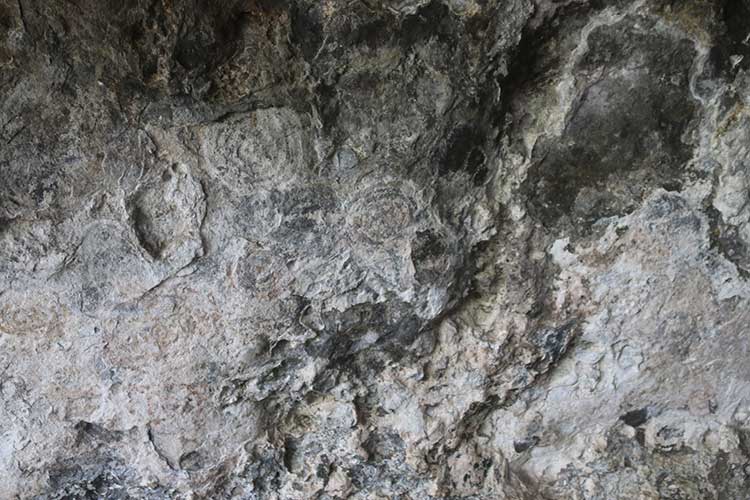
During the whole visit I was enthralled by the rock art, but more by the fact I was standing in the exact location and looking at the exact same thing as someone had done maybe some 4000 years ago. This struck me to the core; in life you do not often get the opportunity to be somewhere that has been used and inhabited for longer than Christianity has been around. The feeling of time surrounding me was amazing. The lives that had passed through the cave, the dances, the rituals, the sacrificing of goats, chickens, and maybe a few innocent villagers in the early days. People lived and survived in the caves when other tribes attacked from the mainland, and all of that happened under my feet, I was able to look at the rock art and see something left behind by this ancient tribe. I felt a link between me and the Batwa people stretching back into time and now I was the latest link in the chain heading to the future.
As we climbed back down the only path to the water’s edge, I realized that the path was probably just as important as the rock art, as it was the only sensible way from the beach to the cave. I imagined people arriving on a similar canoe to me over the millennia and walking along the same path as I had just walked.
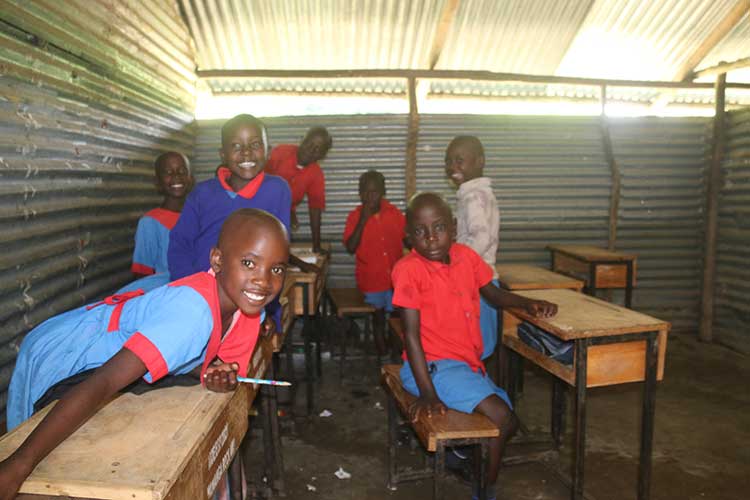
There is a local school connected to the caves which is well worth a visit. If you are from the Western world and went to a normal secondary or primary school, like I did, then visiting one of these schools is a must. It made me realize just how lucky I am to come from a country that cares about education and the children of the country. Rock Art School is a group of corrugated iron, Mabati in Kiswahili, buildings that are in a small stony grove next to the beach below the caves. The school does not have electricity, water, or even a road leading to it, and it must be a nightmare when it rains. The headmaster has a small incredibly hot mabati hut where he sat proudly and showed us the scores of the children studying there. For a child attending the school their only real way of escaping, either the fish-for-sex industry or life on the lake fishing, is high grades. The top students are chosen by the government and sent to boarding schools on the mainland where they have a better chance of getting a good education and a job in the future. The school was my second lesson of the day, I was so impressed by the children and how they wanted to develop their education against all the odds.
Before we left, we made a contribution to the school as all visitors were asked to do. This goes towards the education of the children and the replacement of the corrugated iron sheets with proper tiles and blocks for the walls.
The whole experience left me humbled. The defiance against the poverty that these children have and the amount of work they are willing to put in just to leave is inspiring. If you are in the area and want a trip of a lifetime then head for Mfangano Island and the Rock art caves at Mwanaga you won’t regret it.
If you would like to follow me on Instagram or Facebook, I post most days just click on the links to join the community.
For loads of useful information on African Safaris and Africa in general just click here
If you would like to get in contact with me then click here
Below are some more useful links about Safaris in Africa- Enjoy!
Tippu-Tu African Stateman or Slaver?
Koitalel Arap Samoei the greatest freedom fighter
The Naming of Kenya-How and Why!
Zanzibar Tanzania-A must for your Bucket List
A Trip to Monsoon Restaurant Mtwapa
Kerosene Harvesting Stories from Kenya
Mugged by a Trigger Fish Stories From Kenya
Mekatilili Wa Wenza Stories From Kenya