Lake Victoria is such an excellent geological site, and I thought I would finish my visit to Kisumu and its environs with a few interesting facts.
Before John Hanning Speke visited the lake in 1858 and peered at it through unfocused, sick eyes, it had been a wonder to the local people for eons. Speke named this massive water body Lake Victoria in his pompous English way. Speke was a social climber and believed this would curry favor. He declared at the time that it was the source of the Nile; the methodology behind his claim was the height above sea level, which he cleverly determined by boiling water and measuring the exact temperature. This was quite a feat at the time and turned out to be surprisingly accurate.
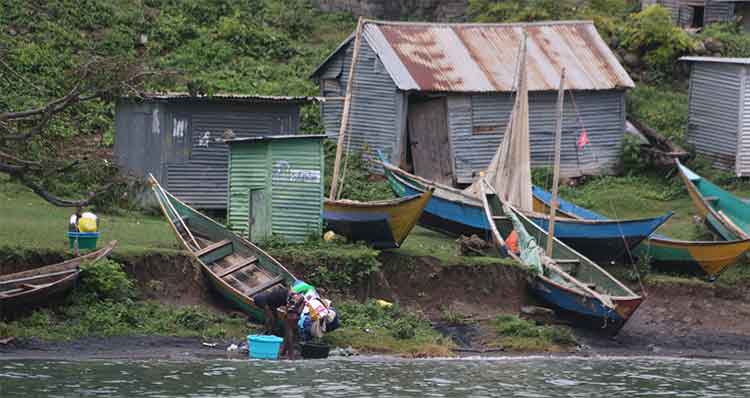
However, before Speke’s sickly visit, the locals had used the body of water for trade and transport for thousands of years. I spoke about the Mfangano Caves in my last newsletter. The Batwa people inhabited those caves for up to 4000 years! Lake Victoria’s shores touch three countries, and they all have different names. In Kenya, the Luo people called it Nam Lowe (body of endless water), and the Ugandans knew it as Nnalubaale (Home of the Gods). The Tanzanians, Swahilis, knew it as Ukerewe. This is also one of the islands in the lake. Even the Rwandans had a name for the lake: Nyanza. Everyone knew it was there long before Speke turned up! But the British name seems to have stuck for now.
Lake Victoria is the largest lake in Africa; when I was in Mfangano, just off the coast of Kenya, it was a one-hundred-nautical mile trip to Kampala. The lake is the primary reservoir for the Nile; I will talk about that more later. Its area is some 26,828 square miles (69,484 square kilometres). The only other lake in the world that is larger is Lake Superior in North America. Lake Victoria is 210 miles (337km), and its greatest width is 150 miles (240km). The coastline alone is over 2000 miles (3,220 km). This is a big place, more of a small sea than a lake. With such a large body of water, one would expect many rivers to flow into it. Still, strangely, there is only one significant inflow, the Katonga River, followed by the Kagera, and only one river flows out of the lake, the White Nile, near the town of Jinja in Uganda. Lake Victoria receives eighty percent of its water from direct rainfall.
Lake Vicotria’s surface is 3,720 feet (1,134 meters) above sea level. This extraordinary height for such a large body of water led Hanning Speke to declare that it was the source of the Nile. However, the lake is not very deep, with an average depth of around 60 feet. There are some deep points, the deepest being 270 feet (82 meters). Over the years, Lake Victoria has been mishandled, primarily due to the colonialization of the African continent.
The first invasive species started as most of these things do. Sometime in the 1870s, A wealthy Rwandan coffee plantation owner wanted a lush garden to enjoy with his wife and children. His gardener was ordered to plant a water hyacinth in an ornamental pond. The gardener then watched in horror as the plant grew, doubling its area every 6 to 18 days until the whole pond was covered with a thick mat of curling, lilypad-shaped, waxy leaves and delicate lavender flowers. However, no light reached the water beneath, and the fish were dying. The landowner ordered the plant to be pulled from the water and thrown away. The voracious plant made its way to the Kagera River and flourished, finally taking up some 20,000 hectares (77 square miles) of Lake Victoria.
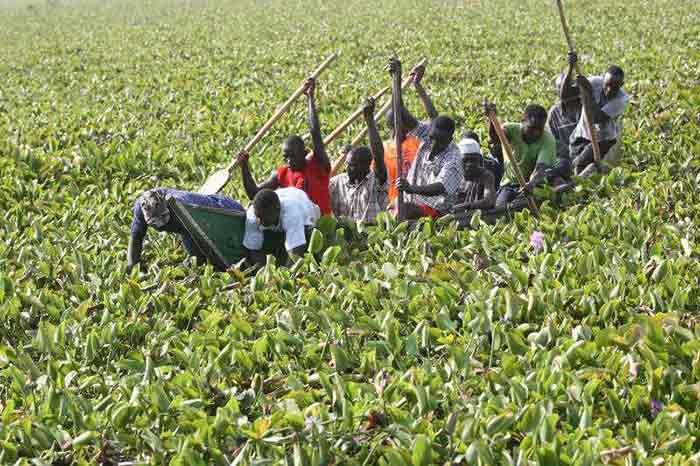
Water Hyacinth Lake Victoria
When the Batwa people occupied Mfangano Island, the lake was estimated to have many thousands of different species of fish. Mostly cichlids due to the unique environment of the lake and its history of the last 15,000 years. This is far more species than any other lake, except Lake Malawi, due to a rapid adaptive radiation process where the fish interbreed and have an excellent habitat. It still supports the world’s largest freshwater fishery, producing 1 million tons of fish annually and employing over 200,000 people directly in the fishing industry.
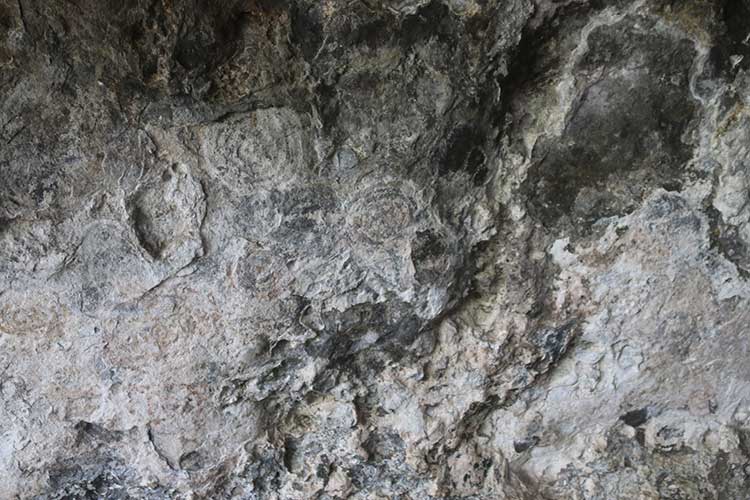
Batwa Rock Art Mfangano Island-Lake Victoria Kenya
In the 1940s and 50s, two highly predatory fish, the Nile Tilapia and the Nile Perch, were introduced to Lake Victoria. The intention was to increase the fish export supply, but the consequences have been severe. These invasive species have decimated many native species, becoming the dominant fish species in the lake. This is a stark reminder of the delicate balance of ecosystems and the potential harm that can be caused by human intervention.
As I mentioned, the Nile has always been a source of conflict for Lake Victoria. Winston Churchill built the railway line from Mombasa to Lake Victoria. The final stop on the railroad was called Port Florence, after the wife of the railway engineer Ronald Preston. However, the local Luos called it Kisumo or Kesumett, and Kisumu was adopted as the name for the whole area as the city developed and colonialization waned.
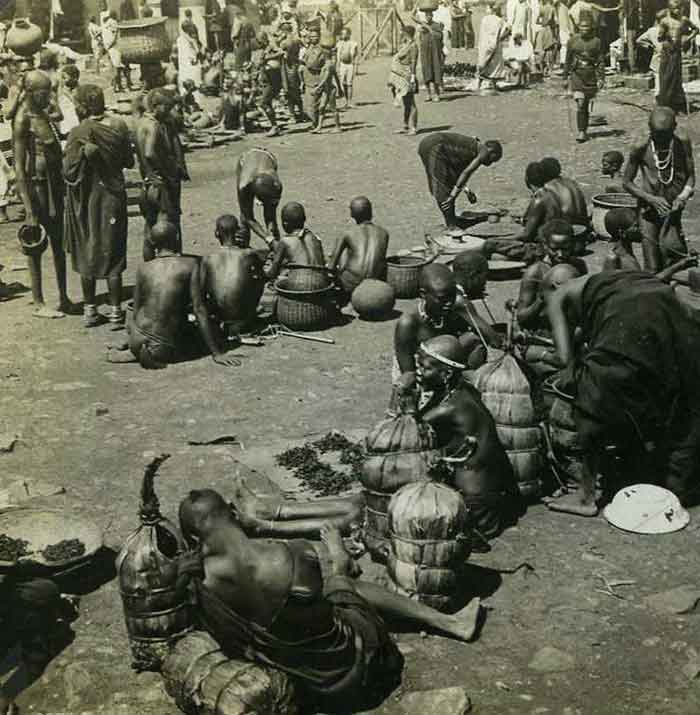
Port Florence late 1800s
1929, the Anglo-Egyptian Treaty covering many issues relating to the Nile River and its tributaries was signed. Although Cairo obtained its independence in 1922, Britain managed troops until 1956. The 1929 agreement was between Britain and Cairo, so really Britain and Britain! The British were at the table on the side of East Africa but failed miserably in their duties. The final signed and subsequent treaty of 1959 were heavily weighted in Egypt’s favor. Between Egypt and Sudan, over 85 billion cubic meters of water was allocated from Lake Victoria, and to add insult to injury, any projects linked to the lake or any tributaries running into the lake could be vetoed by Cairo. They effectively ensured that any development in the countries touching the lake or even Rwanda had to be agreed upon by Egypt’s government. This meant that agriculture and farming around Lake Victoria were frowned upon, and if you tried, an official from Cairo could show up and tell you to stop immediately!
This has caused a lot of friction over the years, and it wasn’t until 1999 that a new cooperative framework was established, and all the countries involved in the lake region were allowed to have their say at the table. Of course, Egypt and Sudan refused to sign the document, but time has moved on. In 2011, Meles Zenawi, the prime minister of Ethiopia, laid the foundation stone for the Grand Ethiopian Renaissance Dam so effectively all deals were off, and each country started making its own decisions.
Since the early 2000s, Kenya has started using the waters of Lake Victoria to develop its agriculture around the lake. Some power projects are underway, and tourism is growing. However, the setback of nearly a century, when one of the country’s significant resources was not even allowed to be touched, has slowed development.
However, I am always optimistic and excited to see the development of Kisumu and its environs. I am sure over the coming years, the area will flourish as there is so much to offer whether you are an investor, business entrepreneur, or just on holiday. If you are in the area, it should be one of the top suggestions on your list of things to do.
If you would like to follow me on Instagram or Facebook, I post most days just click on the links to join the community.
For loads of useful information on African Safaris and Africa in general just click here
If you would like to get in contact with me then click here
Below are some more useful links about Safaris in Africa- Enjoy!
Top Tips for an African Safari and Beach Holiday
African Safari Which is the Best Country to Choose and Why?
Top Tips for the Perfect African Safari Vehicle
The Naming of Kenya-How and Why!
Zanzibar Tanzania-A must for your Bucket List
A Trip to Monsoon Restaurant Mtwapa
Kerosene Harvesting Stories from Kenya
Mugged by a Trigger Fish Stories From Kenya
Mekatilili Wa Wenza Stories From Kenya